
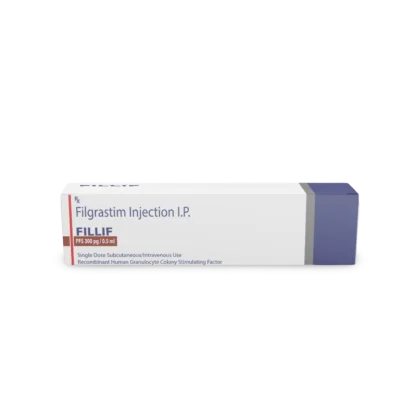
Fillif 300 Mcg Injection
Supports the formation of your white blood cells, assisting your immune system during intensive medical care.
 Blood Cell Support Medications
 The Blood Cell Support category encompasses medications designed to encourage the bone marrow to produce healthy white blood cells. These treatments are essential for patients at risk of neutropenia, which occurs when a drop in white blood cell counts increases susceptibility to infection. The three formulations listed—Fillif, Neukine, and Religrast—are all colony-stimulating factors.
Supports the formation of your white blood cells, assisting your immune system during intensive medical care.

Stimulates your bone marrow to produce more neutrophils, helping your body rebuild its natural immune defenses.

Supports the recovery of white blood cell production by signaling bone marrow to release neutrophils into circulation.
Blood cell support encompasses treatments that manage the production of white blood cells specifically to maintain immune function. These medications are frequently used when a patient’s bone marrow activity is suppressed due to intensive therapies or underlying health conditions. By signaling the body to ramp up cell production, these drugs work to keep the immune system functional during vulnerable periods.
Patients requiring these therapies often have conditions such as severe chronic neutropenia or are navigating recovery after specific medical procedures that impact bone marrow. The primary goal of this supportive care is the reduction of infection risk, which is a major concern when white blood cell levels are low. Maintaining these counts allows the immune system to respond effectively to environmental threats.
Treatment in this category relies primarily on granulocyte-colony stimulating factors, often referred to as G-CSFs. These medications mirror a naturally occurring protein in the body that directs the bone marrow to increase the production of neutrophils, a specific type of white blood cell. When administered, they trigger a cascade that results in higher counts of these critical immune cells within the bloodstream.
In global medical practice, these agents are used defensively to prevent complications or reactively to restore depleted cell counts. Because these formulations are highly specialized, they are administered through injectable forms, ensuring they are delivered directly into the system where they can influence bone marrow function. Their use is carefully monitored by providers across international markets, including sites in Asia, Europe, and North America, to balance cell production with the patient’s specific health profile.
The products in this category share a common mechanism but may differ in their specific manufacturing processes and delivery requirements. Because all listed items are versions of colony-stimulating factors, they function by attaching to receptors on the surface of bone marrow cells. This binding sends a clear signal for the marrow to divide and mature into functional white blood cells.
These agents represent the primary classification of blood cell support. They are engineered to provide a reliable, consistent stimulation of myeloid cells, which are the precursors to neutrophils. By shortening the duration of low white blood cell counts, these injections enable the body to return to a baseline immune state faster than it might on its own.
Before initiating use of these medications, a thorough evaluation of your bone marrow function and current blood counts is standard. It is essential to discuss any history of blood disorders or organ health, particularly involving the spleen, as these factors influence how your body responds to colony-stimulating factors. Providers assess these elements to determine if this support is appropriate for your current health status.
While these medications support immune function, they may also cause a temporary reaction as the bone marrow rapidly increases production. Some individuals experience discomfort in the bones or muscles as a result of this cellular activity. Monitoring your physical response allows your healthcare team to understand how effectively your body is adjusting to the stimulation of white blood cell production.
Colony-stimulating factors should be used with caution in patients with specific hypersensitivity reactions to the ingredients or with pre-existing inflammatory conditions. Because these agents work by stimulating cellular growth, they must be used strictly under clinical supervision to avoid improper cell stimulation. Product labeling and verified clinical sources remain the correct references for specific contraindications, interactions, and potential reactions.
The Blood Cell Support category contains injectable medications designed to stimulate the bone marrow to produce white blood cells. These agents vary by formulation, concentration, and specific patient needs. This informational page does not authorize self-directed selection, clinical interpretation, or unsupervised use of these treatments. Readers should review individual product labeling and speak with a healthcare professional to identify whether these medications are appropriate for their specific clinical situation.