
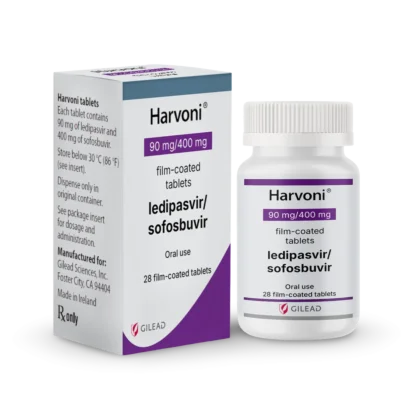
Harvoni Tablet 90 Mg+400 Mg
Blocks specific viral proteins to prevent the hepatitis C virus from replicating and spreading in the body.
 Hepatitis C Treatment
 Hepatitis C treatment encompasses targeted therapies designed to address the hepatitis C virus (HCV) by stopping its ability to replicate within the liver. Two formulations are listed below, including Harvoni (ledipasvir and sofosbuvir) and Velasof (sofosbuvir and velpatasvir). These medications are categorized as direct-acting antivirals, representing the current standard for managing chronic HCV infection across diverse patient populations.
Blocks specific viral proteins to prevent the hepatitis C virus from replicating and spreading in the body.

Targets viral replication enzymes to clear underlying infection and prevent further liver damage from viral activity.
Hepatitis C is a viral infection that primarily affects the liver, often leading to inflammation and cellular damage. When the infection persists for more than six months, it is classified as chronic. This condition is grouped under a specific therapeutic category because treatment focuses on the eradication of the virus rather than the long-term management of symptoms.
Modern therapeutic approaches aim to achieve a sustained virologic response, which indicates that the virus remains undetectable in the blood even after treatment concludes. The medications in this category are designed for adults and certain pediatric populations with specific genotypes of the virus. Because hepatitis C can progress to significant liver complications like cirrhosis or hepatocellular carcinoma, early identification and intervention remain primary objectives for public health.
The medications in this category belong to a class known as direct-acting antivirals (DAAs). Unlike older, non-specific immune-modulating treatments, DAAs target specific non-structural proteins of the HCV, effectively disrupting the viral life cycle at multiple points. By interfering with these proteins, the medications prevent the virus from creating new copies of itself, allowing the body to clear the infection.
Many of these treatments are formulated as fixed-dose combinations, meaning multiple active antiviral agents are contained within a single tablet. This approach simplifies a treatment course while ensuring that the virus is attacked through different mechanisms simultaneously, which reduces the potential for resistance. Patients across international markets often access these treatments through specialized health programs or direct pharmacy supply chains.
The landscape of hepatitis C therapies centers on DAAs that act as inhibitors for viral enzymes. These combinations generally follow a pangenotypic approach, meaning they possess activity against multiple genetic varieties of the hepatitis C virus.
These tablets typically combine an NS5A inhibitor—which targets the protein responsible for viral replication and assembly—with an NS5B polymerase inhibitor. The NS5B inhibitor works by blocking the enzyme that the virus needs to synthesize its own genetic material. By combining these two distinct inhibitors, treatments effectively halt the production of new viral particles across almost all HCV genotypes.
Therapy for hepatitis C requires confirmation of the virus genotype and an assessment of liver function prior to initiation. Baseline testing for co-infections, such as hepatitis B, is often necessary because antiviral treatment can potentially reactivate latent infections. Healthcare providers evaluate these factors to ensure the regimen is appropriate for the patient’s individual clinical profile.
While direct-acting antivirals are generally well-tolerated, some individuals may experience mild fatigue, headache, or gastrointestinal discomfort during the course of treatment. These occurrences are usually transient and do not typically necessitate the discontinuation of the therapy. Monitoring by a professional ensures that any persistent discomfort is addressed promptly.
Hepatitis C medications can interact with a wide range of other drugs, including those for heart conditions, acid reflux, and immunosuppression. Because these antivirals are processed or cleared through bodily pathways, pre-existing kidney or liver impairment may influence the choice of medication. Product labeling and verified clinical sources remain the correct references for specific contraindications, interactions, and potential reactions.
Direct-acting antivirals (DAAs) : Medications that directly target specific proteins of the hepatitis C virus to inhibit its replication.
Genotype : The genetic classification of the hepatitis C virus, which helps determine the most appropriate treatment pathway.
Sustained virologic response (SVR) : The medical goal of treatment, defined as the absence of detectable hepatitis C virus in the blood.
Hepatitis C treatment involves powerful antiviral medications that must be used strictly under clinical supervision. This category provides general information about therapeutic classes, but individual products vary in active ingredients, strength, and approved indications. This page does not authorize self-directed selection, clinical interpretation, or unsupervised use of antiviral therapies. Readers should review individual product labeling and speak with a healthcare professional to determine the most appropriate medical strategy for their specific diagnosis.