
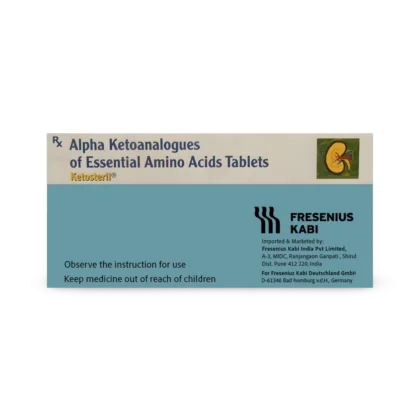
Ketosteril Tablet
Provides essential nitrogen-free amino acid precursors to support protein metabolism and reduce buildup of waste products.
 Kidney Support Medications
 Kidney Support medications assist in the management of protein metabolism for individuals navigating chronic kidney health challenges. One formulation is listed below, specifically Ketosteril, an amino acid supplement designed to support the body’s nutritional requirements when protein intake must be restricted. This therapeutic approach focuses on maintenance alongside renal function management.
Provides essential nitrogen-free amino acid precursors to support protein metabolism and reduce buildup of waste products.
Kidney Support medications belong to a specialized category of treatments intended for patients who require careful regulation of their protein intake to preserve metabolic balance. These formulations are typically utilized in cases where the kidneys struggle to effectively filter waste products resulting from standard dietary proteins. By providing a balanced profile of essential amino acids in a nitrogen-free form, these treatments provide the building blocks necessary for protein synthesis without increasing the burden on renal function.
Patients who require these interventions are usually under the regular care of a nephrologist or renal specialist. The role of these supplements is to prevent malnutrition while enabling a low-protein diet, which is a foundational aspect of managing advanced kidney concerns. These medications are not meant to reverse underlying structural damage but to support physiological stability and delay the need for more intensive renal replacement therapies.
Management of kidney-related metabolic challenges involves a multifaceted strategy that includes dietary adjustments, blood pressure control, and the precise use of nutritional supplements. Essential amino acids, such as those found in this category, serve as a key component of this regimen. By bypassing the need for natural protein breakdown—which produces nitrogenous waste that the kidneys must filter—these supplements allow the body to maintain muscle mass and cellular function.
Across international markets, including Hong Kong, Singapore, and various European health systems, access to these specialized supplements is typically guided by strict clinical oversight. Because these medications interact directly with the body’s waste-processing systems, their use is tailored to the individual’s current blood urea nitrogen levels and overall nutritional status. Treatment protocols often evolve alongside shifts in laboratory markers, making consistent clinical monitoring a standard expectation for any adult on this therapeutic path.
The primary class within this category consists of keto-analogues of essential amino acids. These molecules are synthetically designed to simulate the structure of standard amino acids but do not contain nitrogen. When processed by the body, they utilize existing nitrogenous waste to create new proteins, thereby promoting an anabolic, or “building,” state while simultaneously lowering blood urea levels.
These medications function as a targeted nutrient source. They essentially turn waste products into useful components for the body, which addresses the specific metabolic needs of someone maintaining a low-protein diet. This is not a typical vitamin or mineral supplement; it is a pharmacological approach to nitrogen metabolism. Because safety and tolerability profiles vary, the formulation is strictly chosen based on the clinical documentation of a patient’s specific renal requirements.
Before initiating any supplementation aimed at renal support, a thorough evaluation of serum calcium, phosphate, and nitrogen levels is standard. These supplements can significantly alter how the body manages electrolytes, and improper use may lead to metabolic imbalances. Only use this medication when it has been explicitly included in a care plan developed by a qualified renal specialist, as it is designed for a very specific metabolic profile.
While generally well-tolerated, participants in renal management programs should monitor for digestive discomfort or changes in blood chemistry. Because these treatments directly influence nitrogen metabolism, the body may react if the patient deviates from the prescribed low-protein dietary balance. Report any persistent symptoms to a healthcare provider, as they may indicate a need to adjust either the supplement dose or the dietary protein intake.
Pre-existing conditions, particularly those involving calcium metabolism or liver function, may influence how these medications are processed. Always disclose all concurrent supplements and prescriptions to a provider, as certain vitamins or other dietary additions may interact with the amino acid keto-analogues. Product labeling and verified clinical sources remain the correct references for specific contraindications, interactions, and potential reactions.
Kidney Support medications consist of specialized nutritional supplements intended to modulate metabolic waste processes. This information is for educational purposes only and does not establish a substitute for professional clinical advice or a personalized treatment plan. Individual formulations, dosages, and administration requirements vary depending on your specific health status and laboratory markers. This page does not authorize the unsupervised use or clinical interpretation of these products. Consult your healthcare professional or a renal specialist to discuss the appropriateness of these medications for your health situation.