
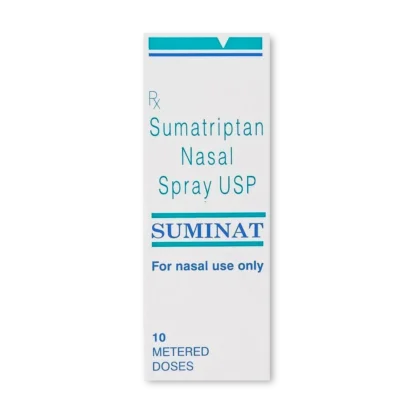
Suminat Nasal Spray 20gm/Dose
Constricts dilated blood vessels in the brain to relieve the throbbing pain associated with migraine attacks.
 Migraine Medications
 Migraine medications provide relief for patients experiencing acute migraine attacks, characterized by severe, throbbing head pain often accompanied by sensitivity to light and sound. One formulation is listed below, which is Suminat Nasal Spray. This category focuses on targeted treatments that address physiological responses during a migraine episode to ease symptoms and regain comfort.
Constricts dilated blood vessels in the brain to relieve the throbbing pain associated with migraine attacks.
Migraine is a neurological condition that causes recurring, intense headaches. These episodes often involve secondary symptoms such as nausea, vomiting, and extreme sensitivity to sensory stimuli. Treatment in this category is directed toward addressing the active phase of an attack, often referred to as abortive or acute therapy.
These medications are intended for use at the first sign of a migraine to shorten the duration and diminish the severity of the associated pain. Because migraines can significantly disrupt daily activities, having access to effective acute treatment is a focus of many neurology and primary care clinical approaches.
Treatment strategies for migraine focus on the specific mechanism of an attack. Many acute treatments work by narrowing blood vessels in the brain or blocking pain pathways that become overactive during a migraine. In the pharmaceutical landscape, these are often referred to as triptans, which specifically target serotonin receptors to reverse the dilation of blood vessels that contributes to headache pain.
Access to these medications often requires a clinical assessment to ensure the treatment aligns with your specific migraine pattern and cardiovascular history. Regulations regarding how these medications are supplied vary across international markets, including the United States, United Kingdom, Australia, and Canada, typically requiring authorized clinical oversight to ensure safety.
The primary class of acute treatment is the triptan family. These compounds are chemically designed to bind to 5-HT1 receptors in the brain, effectively counteracting the inflammatory processes that drive the throbbing pain of a migraine. By modulating these receptors, the medication reduces the release of substances that cause pain and swelling.
Delivery routes for these treatments are diverse, including oral tablets, injections, and nasal sprays. Nasal sprays are frequently utilized when rapid absorption is needed, or when the migraine is accompanied by severe nausea that might make swallowing an oral medication difficult. Choosing an appropriate delivery form is a decision often made in consultation with a provider based on how quickly your symptoms typically progress.
Migraine treatments, particularly triptans, are generally formulated to address only the acute phase of an active migraine. They are not intended for daily use or long-term headache prevention. You should verify that your diagnosis is indeed migraine and not another type of headache, as these medications have specific clinical indications.
While generally effective for most, these medications can cause transient sensations such as tingling, warmth, tightness in the chest or throat, or dizziness. These effects are often short-lived but should be monitored. If you experience unexpected or persistent reactions after use, these should be discussed with a healthcare professional to adjust your treatment plan.
Because these medications affect blood vessel constriction, they are typically contraindicated for people with underlying heart conditions, history of stroke, or uncontrolled high blood pressure. Interactions with other serotonergic medications must be managed carefully to avoid an imbalance in neurological signaling. Product labeling and verified clinical sources remain the correct references for specific contraindications, interactions, and potential reactions.
This page provides educational context regarding migraine medications and the drug classes used to manage acute attacks. Individual products vary significantly in active ingredient, dose, delivery mechanism, and specific clinical directions. This information does not authorize self-directed selection, clinical interpretation, or unsupervised use of these treatments. Always review the detailed product labeling accompanying your medication and consult with a licensed healthcare professional to determine if these treatment options are appropriate for your health profile.