
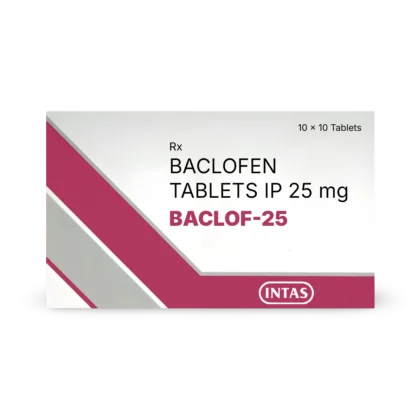
Baclof 25 Mg
Supports reduced muscle stiffness by acting on nerves in the spinal cord to inhibit signal transmission.
 Muscle Relaxants Medications
 Muscle Relaxants represent a class of medications designed to address involuntary muscle spasms and associated musculoskeletal discomfort. These treatments target the nervous system or local muscle tissue to reduce unwanted contractions and improve mobility. One formulation, Baclof (baclofen), is listed for cases where clinical management of muscle stiffness or spasticity is required.
Supports reduced muscle stiffness by acting on nerves in the spinal cord to inhibit signal transmission.
Muscle relaxants are grouped together because they act on the body to reduce the excessive involuntary tension associated with muscle spasms. These conditions often arise from musculoskeletal injuries, nerve-related disorders, or chronic conditions that result in involuntary, sustained muscle contraction. By targeting the pathways that communicate between the brain, the spinal cord, and muscle fibers, these medications aim to ease the discomfort that limits physical function.
Patients who require these interventions often experience acute pain from strains or sprains, or they may manage chronic spasticity related to neurological conditions. While the primary goal is the reduction of muscle tightness, the therapeutic approach varies depending on the underlying cause. These medications are not intended for minor tension but are used when physical discomfort significantly disrupts daily activities or resting patterns.
Treatment strategies for muscle spasms utilize different pharmacological mechanisms to interrupt the cycle of pain and involuntary contraction. Skeletal muscle relaxants are generally categorized based on whether they act primarily through the central nervous system or through direct effects on the muscle itself. In global markets, these medications are strictly regulated and typically require a provider evaluation to ensure they match the clinical cause involved.
Central-acting agents modify the signaling in the brain and spinal cord to dampen the reflex activity that causes a spasm. This systemic approach is often chosen for injuries or conditions involving significant muscle guarding. Other formulations may target the contractile machinery of the muscle, providing a more localized effect. Because these drugs affect the nervous system, healthcare providers carefully assess individual needs to balance muscle relaxation with the potential for systemic effects.
Muscle relaxants function through distinct pathways, and understanding these differences helps in defining the target area for treatment. The choice of medication depends on whether the symptoms are acute, such as those from a recent sports injury, or chronic, such as persistent neurological spasms.
These agents work within the central nervous system to reduce the excessive firing of nerves that leads to spasms. By modulating neurotransmitters, they effectively lower the excitability of motor neurons. This is a common approach for patients experiencing muscle guarding following back pain or acute trauma. Many of these medications are associated with sedation, which functions as both a challenge and a mechanism for allowing the body to rest during recovery.
Antispasticity medications target the spinal pathways to reduce muscle tone in patients with neurological disorders. These formulations are specifically designed to address chronic, sustained stiffness that interferes with movement rather than the temporary spasms seen in injuries. By providing a more stable reduction in muscle tone, they assist with long-term management of mobility and comfort in complex neurological scenarios.
Before initiating any muscle relaxant therapy, it is essential to consider the underlying cause of the muscle stiffness. These medications are not a substitute for physical therapy or other mechanical interventions, which are often first-line approaches. A comprehensive assessment helps ensure that the chosen treatment addresses the specific neurological or musculoskeletal origin of the discomfort without masking secondary symptoms.
Different classes of muscle relaxants carry varying profiles regarding how they are processed by the body and their associated physical sensations. Common reactions often involve the central nervous system, such as drowsiness, dizziness, or changes in coordination. Because these agents intentionally alter nerve signaling, they frequently affect alertness, making certain activities like driving or operating machinery potentially hazardous during the early stages of treatment.
Muscle relaxants can interact with other substances that depress the central nervous system, including alcohol and certain sedatives. The risk of unwanted interactions increases significantly when these medications are combined with other treatments that impair cognition or motor performance. Patients should consider their broader health status, particularly any pre-existing liver or kidney conditions that might influence how the medication is filtered and removed from the system. Product labeling and verified clinical sources remain the correct references for specific contraindications, interactions, and potential reactions.
Muscle relaxants are a specific category of medications used to address involuntary muscle spasms and spasticity by targeting nerve signaling or muscle tissue. Individual products vary significantly in active ingredient, formulation, delivery method, and therapeutic intent. This page serves solely for informational purposes and does not authorize self-directed selection, clinical interpretation, or unsupervised use of these agents. Always review individual product labeling and speak with a qualified healthcare professional when clinical guidance is required.