
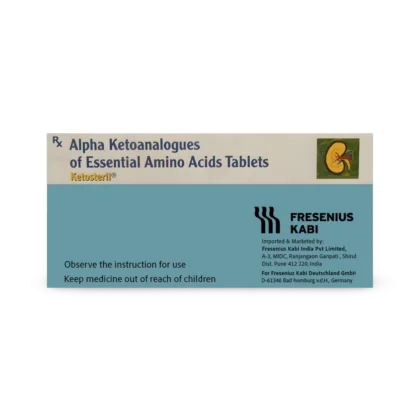
Ketosteril Tablet
Provides essential nitrogen-free amino acid precursors to support protein metabolism and reduce buildup of waste products.
Calcium Ketoanalogues (Ketosteril) serve as a specialized nutritional therapy used to manage protein metabolism in individuals with chronic kidney disease. This single-component formulation supports patients in maintaining nutritional balance by providing essential amino acid structures while minimizing the burden of nitrogenous waste products on renal function.
Provides essential nitrogen-free amino acid precursors to support protein metabolism and reduce buildup of waste products.
Calcium Ketoanalogues operate as nitrogen-free analogues of essential amino acids. When you consume these compounds, your body converts them into amino acids by utilizing surplus nitrogen, which helps move the processing of protein away from traditional pathways that can stress the kidneys. This unique chemical approach allows individuals with restricted protein intake to meet nutritional needs without accumulating excess urea or other metabolic waste.
You might encounter this therapy when your healthcare provider aims to slow the progression of renal insufficiency. Instead of providing full protein molecules, these tablets deliver the necessary precursors that your system builds into usable protein. This provides a way to maintain muscle mass and nutritional integrity while adhering to dietary protocols that limit the intake of standard protein sources.
Regulations for these formulations vary across the United States, United Kingdom, Australia, and Canada, as well as broader international markets. Because they are often classified as therapeutic nutritional agents, their availability generally requires medical coordination. You will typically find that these preparations are treated as pharmacist-dispensed or prescription-required items to ensure they align with an individual’s specific GFR (glomerular filtration rate) and dietary laboratory values.
The global landscape for these products remains focused on clinical support for patients under professional oversight. In many regions, you must coordinate with a nephrologist or registered dietitian to determine if this addition is appropriate for your specific stage of renal health. Since metabolic requirements fluctuate based on your lab results, standardized regulatory oversight helps ensure that the use of these analogues remains secondary to your essential primary care.
These preparations are used to assist in the management of chronic kidney disease, specifically for patients on low-protein diets. By supplying the carbon skeletons necessary for amino acid synthesis, the compound addresses the body’s need for protein-building blocks while managing the potential for uremic toxicity.
This therapeutic approach is primarily intended to delay the need for dialysis or other intensive renal support measures. By easing the workload on your kidneys—which are responsible for filtering the byproduct of protein digestion—you may feel better supported during a period of restricted nutritional intake. It acts as a bridge, allowing your body to sustain itself without the toxic load that high-protein intake can create in a damaged renal environment.
Your metabolism uses these analogues in a cycle known as transamination. When you ingest the tablets, the keto-structure accepts an amino group from other nitrogen-containing substances already floating in your system. By “recycling” this excess nitrogen, your body effectively manufactures the essential amino acids it needs to support tissue repair and maintain muscle mass.
This process serves a dual purpose for your renal system. Not only do you get the nutrition required, but you also remove the need to ingest large amounts of protein, which would otherwise introduce more nitrogen waste into your bloodstream. It is a highly efficient way to keep your protein synthesis levels stable while keeping your nitrogen levels low enough to prevent further strain on your kidney function.
These agents belong to the class of essential amino acid analogues. Unlike complete protein supplements, which contain the full nitrogen-rich structure, this class is refined for metabolic efficiency. They function as a form of “nutritional medicine” that bridges the gap between dietary restriction and biological necessity.
The primary goal of this chemical family involves altering the metabolic environment. Rather than supplementing a deficit in a caloric sense, they aim to optimize how your body synthesizes protein at the cellular level. This selective nutritional support ensures that even when your diet is strictly limited in certain nutrients, your internal machinery continues to function with minimal waste production.
Before starting this therapy, you need to ensure your blood serum levels, particularly your calcium and phosphorus markers, are in a stable range. Because these tablets provide a concentrated form of calcium, they can influence your systemic mineral balance. Your healthcare provider will typically monitor your electrolyte levels to ensure they remain within a safe, functional window.
Many individuals tolerate these formulations well, as they are designed to mimic biological precursors already present in human metabolism. However, you should monitor for any changes in your digestive comfort or general sense of well-being when beginning a new regimen. If you notice persistent nausea or an unusual taste, these are often indicators that your intake schedule or dosage requires a simple adjustment by your medical team.
Because these tablets change how your system processes protein and minerals, they can interact with calcium-rich foods or other medications designed to control phosphate levels. You must discuss your full list of current pills and dietary supplements with your doctor to avoid unexpected spikes in mineral levels. Product labeling and verified clinical sources remain the correct references for specific contraindications, interactions, and potential reactions.
This information about Calcium Ketoanalogues is intended for educational purposes and does not constitute medical advice, diagnosis, or treatment. Individual products containing these analogues may differ in their specific composition, strength, and directed use. This page does not authorize the unsupervised use or clinical application of this supplement. You should always review individual product labeling and consult with a qualified healthcare professional when clinical judgment regarding your kidney health and metabolic needs is required.