
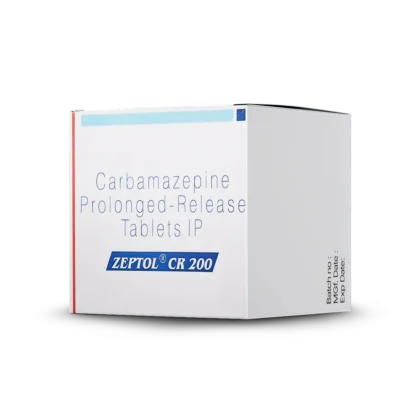
Zeptol CR 200 mg
Stabilizes electrical activity in the brain to reduce seizure frequency and manage nerve-related pain signals.
Carbamazepine (Tegretol) serves as an essential anticonvulsant and mood-stabilizing agent, primarily used to address complex seizure patterns and nerve-related conditions. Two formulations are listed below — Zeptol CR 200 mg and Zeptol CR 400 mg — which utilize controlled-release technology to help maintain steady levels of the compound within your system.
Stabilizes electrical activity in the brain to reduce seizure frequency and manage nerve-related pain signals.

Stabilizes electrical activity in the brain to reduce the frequency of seizures and manage nerve-related pain.
This medication belongs to the iminostilbene class, a group of compounds specialized in slowing down overactive nerve impulses. Physicians typically introduce this treatment when managing epilepsy or specific types of neuropathic pain, such as trigeminal neuralgia. It works by quieting the electrical signaling in your brain and peripheral nerves to keep activity levels stable and manageable.
Because managing these conditions requires precision, different formulations exist to support various titration needs. You might encounter tablets in immediate or controlled-release formats. These variations allow your healthcare provider to adjust your intake based on how you respond to the compound, ensuring that the active concentration stays within an effective window without unnecessary fluctuations.
Products containing this compound are considered pharmacy-regulated medications across the United States, United Kingdom, Australia, Canada, and other global markets. You will generally find that these items require a prescription from a licensed healthcare provider before they can be dispensed. This regulatory oversight ensures that your physical health, including blood cell counts and liver function, can be monitored while you use the treatment.
Regulatory standards for this medication are consistent across major international jurisdictions, reflecting its role as a primary therapy for chronic neurological conditions. While you can find information about these products through online resources, securing a supply always involves a clinical review of your medical history to confirm that this choice is appropriate for your specific health profile.
This medication is primarily used to address partial seizures, specifically those that involve complex symptoms or generalized tonic-clonic activity where consciousness may be altered. By stabilizing nerve cell membranes, it prevents the rapid, repetitive firing that leads to seizures.
Beyond epilepsy, the compound is effectively used to manage trigeminal neuralgia, a condition characterized by sudden, sharp, and intense facial pain. It is also occasionally utilized as a mood stabilizer for conditions where emotional regulation is a clinical priority. In each of these uses, the goal is to calm the overactive signal pathways in your nervous system.
Your nerves rely on electrical signals to communicate, but in conditions like epilepsy, these sparks can become too frequent and erratic. Carbamazepine acts on the voltage-gated sodium channels in your nerves. By keeping these channels closed for slightly longer than usual, it prevents the cells from firing off excessive signals.
Think of it as adding a “speed limit” to your nerve impulses. When your threshold for nerve activity is raised, you become less likely to experience the sudden, uncontrollable electrical bursts associated with seizures or the sharp, jabbing sensations of nerve pain. This systemic effect helps dampen over-excited messaging throughout your central nervous system.
This compound is a foundational member of the dibenzazepine-related anticonvulsants. Medications in this class share a chemical foundation that allows them to interact with the central nervous system to dampen excitability. They are distinct from other anticonvulsants because they often affect sodium transport directly, providing a broad effect that helps with both electrical seizure activity and chronic pain signals.
The therapeutic beauty of this class is its ability to remain effective over long periods. Unlike some short-acting treatments, members of this class are designed to establish a stable “floor” of concentration in your bloodstream. This steady presence is what makes it a go-to choice for patients who need consistent, long-term control over their neurological symptoms.
Before starting this treatment, you should discuss your full medical history with a professional, especially regarding your liver, kidney, or bone marrow health. Pre-existing conditions related to your heart or blood pressure may also influence how you tolerate this compound. Always disclose any other medications you take, as this compound can influence how your body handles other substances.
Common responses often involve initial dizziness, drowsiness, or mild skin sensitivity as your body adjusts to the active ingredient. Your provider will likely recommend routine blood tests to ensure your blood cell production and liver function remain stable while you use the formulation. If you notice persistent skin rashes or signs of jaundice, it is vital to bring these concerns to a healthcare professional immediately.
This medication is known for interacting with a wide variety of other drugs because it can change how your liver processes substances. Even common items like grapefruit juice or certain herbal supplements can change the way the compound is absorbed or cleared. Product labeling and verified clinical sources remain the correct references for specific contraindications, interactions, and potential reactions.
This overview of Carbamazepine is provided for educational purposes and does not represent medical advice. Individual products containing this ingredient may vary in their release mechanics, strength, and clinical directions. This page does not authorize the unsupervised use of this medication or the interpretation of clinical outcomes. Please review individual product labeling carefully and always consult with a healthcare professional when your care, dosing, or treatment needs require clinical judgment.