
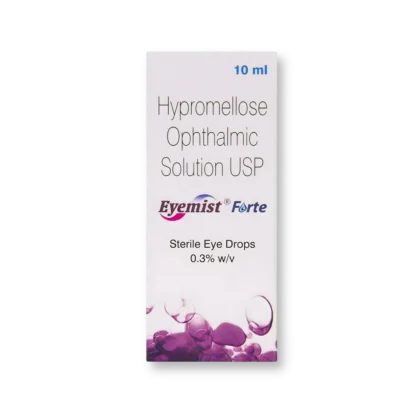
Eyemist Forte 10 ml
Soothes ocular surface dryness by mimicking natural tears to restore consistent moisture and comfort to eyes.
Carboxymethylcellulose functions as an ocular lubricant, mimicking natural tears to soothe and protect your eyes. You might recognize it as a core component in many store-bought eye drops designed for comfort. One formulation, Eyemist Forte 10 ml, is listed below to assist with your search for consistent ocular hydration.
Soothes ocular surface dryness by mimicking natural tears to restore consistent moisture and comfort to eyes.
Carboxymethylcellulose is a cellulose derivative known for its high viscosity and ability to hold onto moisture. When used in eye drops, it creates a protective barrier over the ocular surface, effectively trapping water to keep your eyes feeling hydrated and comfortable for longer durations.
Because it mimics the physical properties of human tears, it is a primary choice for managing dry eye symptoms. You will find it in various preparations, ranging from standard bottles to single-use vials, ensuring you can maintain eye health regardless of your daily schedule.
Products containing carboxymethylcellulose are treated as healthcare preparations across the United States, United Kingdom, Australia, and Canada, as well as other international markets. These formulations are typically available through pharmacies and retailers without a prescription, as they are considered topical supportive care for eye health.
While accessibility is generally straightforward, requirements for these products can vary depending on local pharmaceutical regulations. Always check the labeling on your selected product to understand the necessary storage conditions and shelf life, which are established to maintain the integrity of the lubricant once opened.
This compound is primarily used to address symptoms of dry, irritated, or fatigued eyes. It manages the discomfort brought on by environmental triggers, such as wind, dust, smoke, or prolonged screen time. By providing immediate relief, it assists with the daily maintenance of ocular moisture levels for those experiencing chronic dryness.
Carboxymethylcellulose works by increasing the viscosity of your eye’s tear film. Think of it as a thicker, more stable version of your natural tears that does not evaporate as quickly. By binding to the moisture already present on your eye, it prevents dryness and provides a cushioning layer that protects your sensitive corneal tissues from friction.
This ingredient belongs to a family of compounds called ocular lubricants or artificial tears. These substances are designed to augment your body’s natural tear production when it becomes insufficient due to aging, environmental factors, or digital eye strain. They work by replenishing the hydration levels needed to keep the eye surface smooth and clear.
Different lubricants within this class often vary by viscosity and the presence of preservatives. Some aim for a light, watery texture, while others—like those containing carboxymethylcellulose—offer a slightly thicker consistency to provide more durable comfort throughout your day.
Always ensure the seal on your bottle is intact before the first use. If you wear contact lenses, verify whether the specific formulation is intended to be used while your lenses are in or if you should remove them before application.
While these drops are generally well-tolerated, you may experience brief, mild blurring immediately after application as the fluid spreads across your eye. If you notice persistent redness, unusual pain, or changes in your vision, discontinue use and speak with a professional.
If you are currently using other eye drops or ointments, space out the application of each by several minutes to ensure your eyes absorb the medication properly. Product labeling and verified clinical sources remain the correct references for specific contraindications, interactions, and potential reactions.
This overview provides common information about carboxymethylcellulose and is not medical advice or a substitute for professional evaluation. Individual products may vary in their concentration, inclusion of preservatives, and compatibility with your lifestyle. This page does not authorize clinical application, self-directed interpretation, or unsupervised use. If you have concerns about your ocular health or experience persistent symptoms, always review the individual product labeling and consult with an optometrist or healthcare professional.
Jun 12, 2026 ⋅ 5 min read
An overview of how healthcare professionals differentiate eye care medications based on clinical efficacy, dosage forms, and patient-specific health needs.
Jun 12, 2026 ⋅ 7 min read
This clinical guide details the side effects, risks, and potential interactions associated with common eye care medications, emphasizing safety and patient awareness.
Jun 12, 2026 ⋅ 6 min read
An objective overview of common eye care medications, covering drug classes, mechanisms of action, and safety principles for managing ocular health.
Jun 12, 2026 ⋅ 6 min read
A guide to the primary classes of eye care medications, covering their mechanisms of action, common clinical uses, and how they address various ocular conditions.