
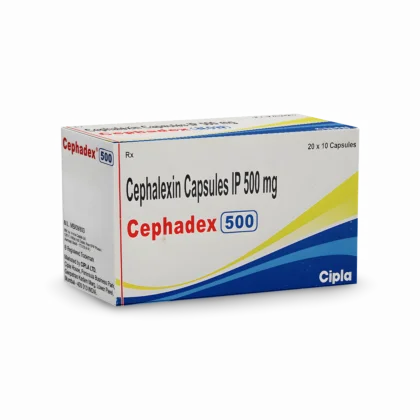
Cephadex 500 mg
Blocks bacterial cell wall formation to stop the growth and spread of sensitive bacterial infections.
Cefalexin (Keflex) is a widely used antibiotic that belongs to the cephalosporin family. It acts as a primary treatment for various bacterial infections by preventing bacteria from building essential cell walls. Two formulations are listed below — Cephadex 500 mg and Phexin 250 mg — providing different strengths for your needs.
Blocks bacterial cell wall formation to stop the growth and spread of sensitive bacterial infections.
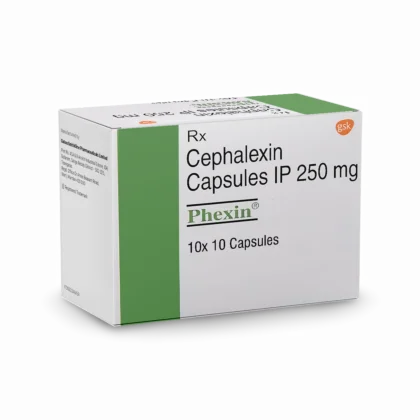
Targets bacterial infection pathways by disrupting cell wall synthesis to stop the growth and spread of bacteria.
Cefalexin is a broad-spectrum antibiotic, meaning it covers a wide variety of bacterial strains. Because it is effective against many common pathogens, it has become a staple in many clinical settings across the United States, United Kingdom, Australia, and Canada. Since different infections require specific dosing, manufacturers produce the medication in varying strengths to match the professional assessment provided by your doctor.
The compound is part of the first-generation cephalosporins. You can think of it as a tool that specifically targets the protective barrier around bacteria. By weakening this wall, the bacteria can no longer survive or multiply, allowing your immune system to clear the remaining infection more effectively.
Regulatory status for this antibiotic varies depending on the specific legal framework of your country, such as the standards maintained in the United States, United Kingdom, Australia, and Canada. In almost all medical jurisdictions, this compound requires a formal assessment by a licensed healthcare provider to ensure it is the appropriate choice for your specific infection.
Because it is a potent antimicrobial, it is rarely available without oversight. Authorities in the United Kingdom and Australia, for instance, strictly regulate its distribution to ensure that the medication is used only when clinically necessary. This helps prevent the development of bacterial resistance, which occurs when antibiotics are used unnecessarily or incorrectly.
This medication addresses a range of bacterial infections that affect the skin, respiratory tract, urinary tract, and bones. It is frequently chosen when a patient has a confirmed bacterial cause for an illness like tonsillitis or a skin-related infection. By targeting the source of the bacteria, it assists the body in recovery and reduces the progression of symptoms.
It is important to understand that this compound is exclusively for bacterial pathogens. It does not provide any benefit for viral illnesses such as the common cold, influenza, or other viral respiratory conditions.
Think of bacteria as having an outer shell that keeps them stable and healthy. Cefalexin works by binding to specialized proteins located inside the bacteria, which are responsible for building these protective shells. This process is known as inhibiting cell wall synthesis.
When the bacteria attempt to grow or divide, they fail to reconstruct their shell correctly. Without a stable exterior, the bacteria become vulnerable and eventually disintegrate. This biological interruption effectively stops the infection in its tracks, making it much easier for your internal systems to resolve the issue.
Cefalexin belongs to the cephalosporin class of antibiotics. These are chemical cousins to the penicillin family, though they have unique structural differences that make them effective against a different spectrum of bacteria. Many patients who might have mild sensitivities to other drug classes find these compounds to be a reliable alternative.
The entire class is defined by the same core mechanism of action: preventing the formation of bacterial cell walls. While individual medications in the class vary slightly in how they are absorbed or how long they remain active in your system, they all share this precision-targeted approach to clearing infections.
Before you begin, let your provider know if you have a history of allergies, especially to penicillin or other cephalosporins. If you have any underlying kidney or liver processing concerns, this information is vital, as these organs are responsible for moving the remains of the medication out of your system.
Common reactions often involve the digestive system, such as mild stomach discomfort or changes in regularity. Because medications change the balance of bacteria in your body, some people notice secondary effects if the antibiotic interacts with their internal flora. If you notice persistent or severe changes, seek professional input.
Other medications, including certain blood thinners or diabetes treatments, can sometimes interact with this class of antibiotic. Always ensure your healthcare provider has a list of everything you are currently taking, including supplements, to avoid unplanned interactions. Product labeling and verified clinical sources remain the correct references for specific contraindications, interactions, and potential reactions.
Antibiotic : A type of medicine that kills bacteria or prevents them from multiplying, used specifically for bacterial infections.
Broad-spectrum : A descriptor for an antibiotic that is effective against a wide variety of different bacterial groups.
Cephalosporin : A class of antibiotics that share a core chemical structure and work by disrupting the construction of bacterial cell walls.
Inhibition : The process of slowing down, stopping, or preventing a specific biological outcome, such as the building of a cell wall.
This overview provides educational information about Cefalexin and should not be considered medical advice. Individual products containing this ingredient may differ in formulation, strength, and directions. This page does not authorize clinical application, self-directed interpretation, or unsupervised use of any antimicrobial. You should always review individual product labeling and speak with a qualified healthcare professional when clinical judgment or medical intervention is needed regarding your health.

Jun 12, 2026 ⋅ 5 min read
A professional overview of common side effects, adverse reactions, contraindications, and potential interactions associated with antibiotic medications.
Jun 12, 2026 ⋅ 6 min read
A guide to understanding antibiotics, their classifications, mechanisms of action, and core safety considerations for patients seeking information on bacterial infections.
Jun 12, 2026 ⋅ 5 min read
Understand how healthcare professionals differentiate between various antibiotic options, including factors like efficacy, dosage forms, and patient-specific needs.
Jun 12, 2026 ⋅ 5 min read
An educational overview of common antibiotic drug classes, exploring how these medications function, their typical clinical applications, and the distinct characteristics of each major group.