
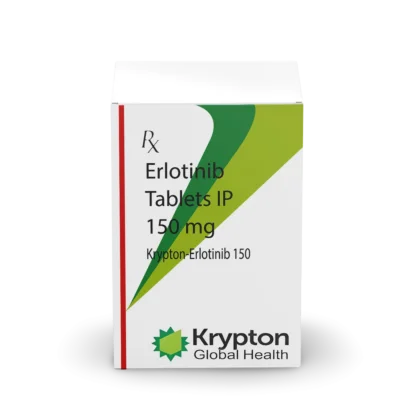
Krypton Erlotinib 150 Mg Tablet
Blocks specific cellular signals that drive uncontrolled cell division in certain types of lung and pancreatic tumors.
Erlotinib (Tarceva) is a targeted therapy used to manage specific forms of non-small cell lung cancer and pancreatic cancer. It acts by inhibiting the signaling pathways that encourage tumor cells to multiply. One formulation is listed below — Krypton Erlotinib 150 mg tablets — providing access to this concentrated therapeutic compound.
Blocks specific cellular signals that drive uncontrolled cell division in certain types of lung and pancreatic tumors.
Erlotinib belongs to a class of medicines known as tyrosine kinase inhibitors. Unlike broad-spectrum treatments, it focuses on the epidermal growth factor receptor (EGFR). By targeting this specific protein, the compound interrupts the signals that tell cancer cells to divide and grow.
Multiple formulations exist because the delivery of this targeted therapy requires precise manufacturing to ensure the compound reaches your bloodstream effectively. The versions you find on the market reflect different production standards, but they must all meet rigorous quality benchmarks to provide the same therapeutic intention as the originator compound, Tarceva.
Products containing erlotinib are strictly regulated as potent pharmaceutical agents in the United States, United Kingdom, Australia, Canada, and other global markets. Because of the way this compound interacts with cellular growth, it requires professional medical supervision throughout your course of treatment.
Regulations regarding how you access these medications vary between regions like the United States, the United Kingdom, Australia, and Canada. In almost every jurisdiction, you will need a valid prescription from an oncologist or specialist to obtain these tablets. Pharmacy-level controls ensure that you receive the correct strength relative to your specific diagnosis and health profile.
This medication is primarily used to address non-small cell lung cancer, particularly in cases where the tumor carries specific EGFR mutations. It is also used in combination with other medicines to assist in the care of advanced pancreatic cancer. These applications are highly specific, relying on the medication’s ability to pinpoint receptors that drive cancer cell expansion.
Erlotinib works by locking onto the tyrosine kinase enzyme within the EGFR. Think of this enzyme as an “on-switch” for cells; when it is overactive, as it often is in specific cancer types, it forces cells to replicate uncontrollably. By occupying this switch, the medication shuts down the signal, effectively slowing the progression of the disease.
Your body processes this compound through specific biochemical pathways, mainly involving the liver. Because it is highly potent, how your body filters and moves the compound through your system is a major factor in how a provider determines your individual course of treatment.
Erlotinib is a member of the epidermal growth factor receptor inhibitor family. These medicines are designed to block the signals that drive cellular proliferation, making them significantly more targeted than traditional cytotoxic chemotherapy.
Because of this specific targeting, the class is often associated with particular physiological responses that reflect the wide distribution of EGFR proteins throughout the body, including in your skin and gastrointestinal tract. This is why many people in this therapy class experience common, predictable physical reactions during treatment.
Before starting this treatment, your medical team will assess your current liver and kidney function, as these organs are primary to how you process the compound. Inform your team about all concurrent medications, including over-the-counter supplements, to prevent unwanted chemical interactions.
Because the medication targets EGFR, which is also present in healthy skin and surface cells, you might notice skin rashes or digestive changes. These are common biological responses to the targeted nature of the treatment. Any significant change in your physical health should always be reported to your specialist immediately.
Erlotinib can interact with substances that affect stomach acidity or alter liver enzymes, which can change how much of the medicine enters your bloodstream. Smoking status is also a significant factor, as it can decrease the concentration of the medication in your body. Product labeling and verified clinical sources remain the correct references for specific contraindications, interactions, and potential reactions.
EGFR : A protein on the surface of cells that, when overactive or mutated, can trigger uncontrolled cancer cell growth.
Tyrosine Kinase Inhibitor : A type of targeted therapy that blocks specific enzymes, preventing cells from receiving signals to divide.
Targeted Therapy : A category of cancer treatment that uses substances to identify and attack specific cancer cells while often sparing healthy cells.
This information is for educational purposes and provides an overview of erlotinib; it is not medical advice or a recommendation for use. Individual formulations may differ in their specific composition and manufacturing standards. This page does not authorize self-directed treatment, clinical application, or unsupervised use of any pharmacy product. Always review the specific labeling provided with your product and consult with your oncologist or healthcare professional before making any decisions regarding your health.
Jun 12, 2026 ⋅ 6 min read
A plain-language guide to types of cancer treatment medications, how they function, and general considerations for managing therapy safely and effectively.
Jun 12, 2026 ⋅ 6 min read
An analytical overview of how oncologists select cancer treatments, focusing on clinical guidelines, efficacy profiles, dosage forms, and patient-specific variables.
Jun 12, 2026 ⋅ 6 min read
An overview of common cancer treatment medication classes, explaining their mechanisms of action and how different types target specific biological pathways in cancer cells.