
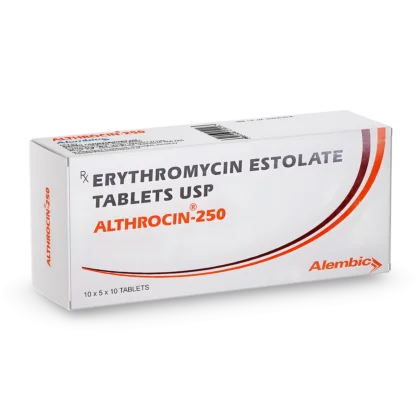
Althrocin 250 Mg
Targets protein production within bacterial cells to stop their multiplication and clear existing infections across body tissues.
Erythromycin is a well-known macrolide antibiotic used to address various bacterial infections. You may recognize it as the active compound in originator brands like E-Mycin or Ery-Tab. One formulation, Althrocin 250 Mg, is listed below, representing the standard tablet delivery form used for targeted antibacterial support in individuals with specific infection types.
Targets protein production within bacterial cells to stop their multiplication and clear existing infections across body tissues.
Erythromycin belongs to the macrolide class of antibiotics. It is primarily used to address bacterial infections affecting the respiratory tract, skin, and soft tissues. Because bacteria can cause a wide range of illnesses, physicians often select this compound when they need to stop the spread of susceptible pathogens.
Different brands and generic versions exist to provide accessibility to this treatment. You will find that while the active compound is identical across these versions, they may differ in strength or the way they are processed by your body. Understanding that these are all the same core ingredient helps you identify the correct version for your needs.
Products containing this ingredient are subject to healthcare regulation across the United States, United Kingdom, Australia, and Canada. In these markets, erythromycin is classified as a prescription medication because of the need to match the antibiotic specifically to the type of infection you have.
Regulation helps ensure that you receive the correct dosage for your specific health situation. While availability requirements may shift slightly between countries, you will almost always need a verified assessment from a provider before starting a course of this medication. This process keeps you protected and ensures the antibiotic is effective for your particular case.
This medication is used to manage a variety of bacterial concerns. It is often employed for respiratory infections like pneumonia, bronchitis, or pertussis. Additionally, it addresses skin infections and certain sexually transmitted infections where penicillin cannot be used.
By targeting the source of the infection, this compound assists with reducing illness duration. It acts to stop the progression of symptoms, allowing your body’s natural defenses to recover from the existing bacterial load.
Erythromycin works by disrupting the internal machinery bacteria use to survive. Specifically, it binds to a part of the bacterial ribosome—the cell’s protein-building center—to block the production of essential proteins. Without these proteins, the bacteria cannot grow or multiply.
Think of it as a roadblock for bacterial replication. When the bacteria stop multiplying, they eventually die off, which eases the burden on your immune system. This targeted approach allows your body to clear out the infection more efficiently while leaving your own healthy cells largely unaffected.
Macrolide antibiotics like erythromycin are defined by their unique chemical structure, which includes a large macrocyclic lactone ring. This structure allows them to penetrate bacterial cells effectively, making them a common choice when other antibiotic classes are not appropriate for your specific history.
Because they are bacteriostatic, their primary goal is to prevent the population of bacteria from increasing rather than killing them instantly. This provides a focused way to support your recovery. Their versatility across different types of infections makes them a cornerstone of standard antibacterial therapy used in modern healthcare worldwide.
Before starting this treatment, ensure your healthcare provider has your full medical history. This includes any past reactions to macrolide antibiotics, as well as information about current heart conditions or liver health, as your liver processes this compound extensively.
You might experience mild digestive discomfort, such as nausea or abdominal cramping, when taking an antibiotic of this class. If these sensations feel severe or persist, it is important to monitor your response and keep your provider informed about how you feel during the treatment course.
Erythromycin can interact with several common medications, potentially changing how they work in your system. Be cautious if you are already taking drugs for heart rhythms or other chronic conditions. Product labeling and verified clinical sources remain the correct references for specific contraindications, interactions, and potential reactions.
This page provides an educational overview of erythromycin and is not medical advice. Individual products containing this ingredient may differ in formulation, strength, and directions. This resource does not authorize clinical application, self-directed interpretation, or unsupervised use of any antibiotic. Always review individual product labeling and speak with a qualified healthcare professional when clinical judgment is needed to address your specific symptoms or health requirements.

Jun 12, 2026 ⋅ 5 min read
A professional overview of common side effects, adverse reactions, contraindications, and potential interactions associated with antibiotic medications.
Jun 12, 2026 ⋅ 6 min read
A guide to understanding antibiotics, their classifications, mechanisms of action, and core safety considerations for patients seeking information on bacterial infections.
Jun 12, 2026 ⋅ 5 min read
Understand how healthcare professionals differentiate between various antibiotic options, including factors like efficacy, dosage forms, and patient-specific needs.
Jun 12, 2026 ⋅ 5 min read
An educational overview of common antibiotic drug classes, exploring how these medications function, their typical clinical applications, and the distinct characteristics of each major group.