
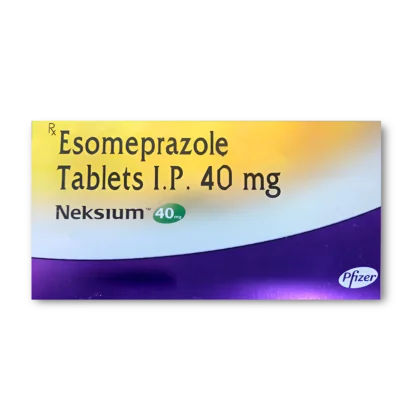
Neksium 40 Mg
Reduces stomach acid production to provide relief from persistent heartburn and support the healing of ulcers.
Esomeprazole (Nexium) is a widely recognized proton pump inhibitor used to manage conditions caused by excessive stomach acid, such as heartburn and esophageal irritation. The formulation Neksium 40 mg is listed below, providing a reliable option for individuals looking to address acid-related digestive symptoms through a standard pharmaceutical approach.
Reduces stomach acid production to provide relief from persistent heartburn and support the healing of ulcers.
Esomeprazole belongs to a family of medications known as proton pump inhibitors (PPIs). By targeting specific enzymes in the lining of your stomach, it efficiently limits the amount of acid produced, which provides relief when your esophagus or stomach lining is irritated by acid exposure.
You might notice this ingredient under the originator brand Nexium, though various generic versions exist to provide similar therapeutic outcomes. Healthcare providers often suggest this type of medication for individuals who experience persistent acid reflux or symptoms that do not improve with basic antacids alone.
Products containing this ingredient are subject to pharmaceutical regulations across countries such as the United States, United Kingdom, Australia, and Canada. In most of these regions, a provider’s authorization is required to ensure the medication is appropriate for your specific health history.
Regulatory requirements can vary depending on where you are located. Some markets classify these medications as pharmacy-only, while others require a formal written request from a medical professional before distribution. Always verify the specific rules in your region to understand how you can access your prescribed supply.
This medication is primarily used to address gastroesophageal reflux disease, commonly known as GERD. It assists by lowering the volume of acid that travels back into the food pipe, providing comfort and allowing existing irritation to heal over time.
It is also frequently utilized in the care of peptic ulcers and conditions where the stomach produces an abnormally high amount of acid. By maintaining a more neutral environment within your digestive tract, the medication manages the frequent burning sensation associated with these chronic issues.
Your stomach relies on a process involving “proton pumps”—tiny cellular engines that push acid into the digestive space. Esomeprazole blocks these pumps directly, effectively turning down the volume on acid production at the source.
Because it acts on the final step of acid secretion, it is significantly more effective at controlling acid levels than medications that simply neutralize acid already present in the stomach. This targeted approach is why it remains a standard choice for long-term management of digestive sensitivity.
Proton pump inhibitors represent one of the most effective ways to manage acid-related digestive health. This drug class is unified by a singular purpose: the sustained suppression of gastric acid to protect the delicate tissues of your upper digestive tract.
Unlike short-acting antacids that provide temporary relief by chemically reacting with stomach acid, PPIs provide a sustained reduction in secretion. This allows your body the necessary window of time to recover from the damaging effects of chronic acidity.
Before starting this medication, ensure your provider understands any liver or kidney history, as these organs are involved in how your body clears the compound. Be open about all other medications you take, specifically those for blood clotting or heart health, to avoid potential clashes between treatments.
Most individuals find this medication generally manageable, though some may notice digestive changes like mild discomfort or shifts in bowel habits. These reactions are typically transient, but persistent or severe discomfort should be discussed with a professional rather than ignored.
Because this medication alters your stomach’s acidity levels, it can change how your body absorbs certain vitamins or other medicines that depend on an acidic environment. Product labeling and verified clinical sources remain the correct references for specific contraindications, interactions, and potential reactions.
Proton Pump Inhibitor : A class of medication that slows the enzyme systems in the stomach responsible for acid secretion.
Gastroesophageal Reflux Disease (GERD) : A chronic condition where stomach acid flows back into the esophagus, causing irritation and burning.
Delayed-Release : A specialized coating on medication that ensures the active ingredient is released in the small intestine rather than the stomach to maximize absorption.
The information provided about esomeprazole serves as an educational overview and does not constitute clinical advice. Individual products containing this ingredient may differ in formulation, strength, and directions for use. This page does not authorize the clinical application, self-directed interpretation, or unsupervised use of any medication. You should always review individual product labeling and speak with a healthcare professional when clinical judgment regarding your symptoms or treatments is needed.
Jun 12, 2026 ⋅ 5 min read
An analytical overview of digestive health medications, focusing on how different drug classes—including PPIs and prokinetics—are differentiated by efficacy, onset, and clinical context.
Jun 12, 2026 ⋅ 6 min read
A clinical guide to the side effects, risks, and interactions associated with common digestive health medications, focusing on patient safety and informed awareness.
Jun 12, 2026 ⋅ 6 min read
An overview of common medications for digestive health, detailing classes like proton pump inhibitors and prokinetics, their mechanisms of action, and important safety information.
Jun 12, 2026 ⋅ 5 min read
Overview of common digestive health medication classes, including PPIs, H2 blockers, and prokinetics, focusing on their mechanisms of action and clinical applications for patient education.