
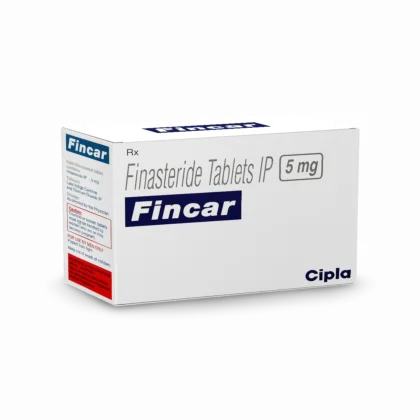
Fincar 5 mg
Blocks the enzyme responsible for converting testosterone into the hormone that causes prostate growth and thinning hair.
Finasteride — the active compound in Proscar and Propecia — is a 5-alpha-reductase inhibitor. It is used to address male pattern hair loss and manage the symptoms of benign prostatic hyperplasia (BPH). Four formulations are listed below, including Fincar 5 mg, Finpecia 1 mg, Proscalpin 1 mg, and Proscare 5 mg tablets.
Blocks the enzyme responsible for converting testosterone into the hormone that causes prostate growth and thinning hair.
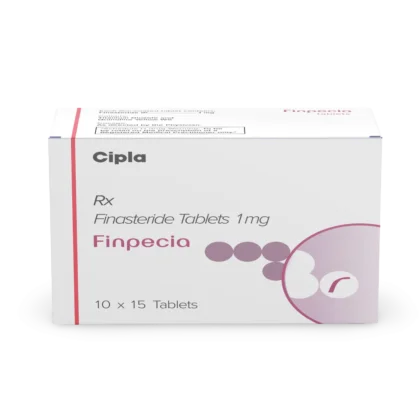
Blocks the hormone responsible for scalp hair follicle shrinkage and prostate enlargement to manage hair loss.
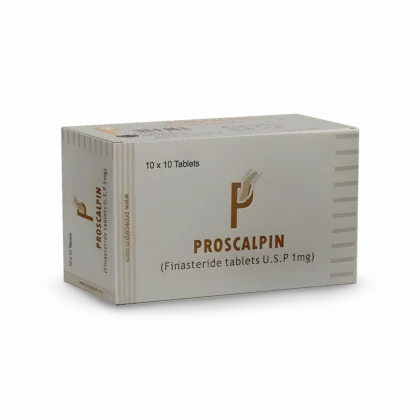
Inhibits the conversion of testosterone into dihydrotestosterone to slow hair thinning and support scalp hair maintenance.
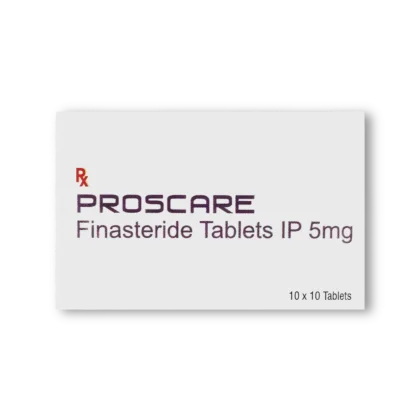
Blocks an enzyme that converts testosterone into a hormone responsible for prostate growth and hair follicle thinning.
You might recognize this compound as a primary treatment for androgenetic alopecia, commonly known as male pattern hair loss. By reducing the levels of a specific hormone in your scalp, it assists in slowing further hair loss and may promote scalp hair regrowth. Beyond hair, it is frequently used to manage the physical symptoms associated with an enlarged prostate.
Clinical researchers categorized this compound as a 5-alpha-reductase inhibitor. This means it specifically targets the enzyme responsible for converting testosterone into a more potent androgen called dihydrotestosterone (DHT). Since high DHT levels in the scalp are linked to the shrinking of hair follicles, lowering these levels is the core purpose of this medication.
Finasteride products are subject to healthcare regulation across the United States, United Kingdom, Australia, Canada, and other international markets. These products typically require a prescription from a licensed healthcare provider due to their pharmacological activity. Regulations ensure that use is based on a professional assessment of your specific health history and condition.
Because this compound directly affects hormonal pathways, access is restricted to pharmacy or clinical channels in most regions. It is common for regulatory bodies to monitor the distribution of these medications to prevent unsupervised use. Always verify the guidelines specific to your local area before searching for formulations online.
This medication is primarily used to address two distinct conditions: male pattern hair loss (androgenetic alopecia) and benign prostatic hyperplasia (BPH). For hair loss, the lower-strength versions are typically utilized to stabilize follicle health over time.
For BPH, the medication is used to decrease the size of an enlarged prostate. This helps improve urinary flow and reduces the need for surgical intervention often associated with prostate growth. By addressing the underlying hormonal driver of these conditions, it assists in managing symptoms rather than just treating them temporarily.
Think of your body’s hormone processes like a chain reaction. When testosterone interacts with the 5-alpha-reductase enzyme, it creates dihydrotestosterone (DHT). In your scalp, DHT causes follicles to miniaturize, eventually stopping hair production. Finasteride effectively “blocks” this enzyme, preventing the creation of excess DHT and giving follicles a chance to recover.
In the context of an enlarged prostate, the mechanism remains similar. Prostate cells are sensitive to DHT levels, and reducing this hormonal signal causes the glandular tissue in the prostate to shrink. This physical change eases the mechanical pressure on the urethra, which is what helps improve urinary function for those managing BPH symptoms.
Finasteride belongs to the class of 5-alpha-reductase inhibitors. This family of compounds shares a specific mechanism focused on androgen metabolism. By inhibiting the enzyme that triggers the transition to more potent androgens, these compounds assist in regulating tissue growth in highly specific areas of the body.
The impact of this drug class is localized to tissues that express the specific 5-alpha-reductase enzyme, such as the hair follicles and the prostate gland. Because it targets the enzymatic conversion process, it does not act as a general hormone replacement therapy. Instead, it adjusts the internal balance to slow down processes that have become overactive.
Before starting this medication, ensure your provider knows about any history of liver issues or prostate-related abnormalities. Because this compound influences hormonal pathways, it is not intended for use by women or children.
Some individuals may notice changes in sexual desire or function while taking this medication. These symptoms can sometimes persist even after the compound is no longer in your system. Monitor how your body responds during the first few weeks of consistent use.
Alcohol consumption and other medications may influence how your body processes this compound. Be transparent with your doctor about all supplements or medications you are currently using, as hormonal treatments can interact with various substances. Product labeling and verified clinical sources remain the correct references for specific contraindications, interactions, and potential reactions.
This information provides an educational overview of Finasteride and is not medical advice. Individual products containing this ingredient may differ in formulation, strength, and directions. This page does not authorize clinical application, self-directed interpretation, or unsupervised use of hormonal medications. You should review the individual product labeling provided by the manufacturer and speak with a healthcare professional when clinical judgment is needed to address your specific symptoms or health requirements.
Jun 12, 2026 ⋅ 6 min read
An overview of commonly used medications for hair loss, comparing their mechanisms of action, administration methods, and clinical considerations for various patient profiles.
Jun 12, 2026 ⋅ 6 min read
A comparative overview of common medications for men's health conditions, focusing on mechanism, clinical use, and patient-specific factors for informed decision-making.
Jun 12, 2026 ⋅ 5 min read
A clinical overview of potential side effects, contraindications, and drug interactions associated with common hair loss treatments like Finasteride, Minoxidil, and Tretinoin.
Jun 12, 2026 ⋅ 7 min read
This guide provides an overview of common medications used for hair loss, explaining their mechanisms of action, typical indications, and key safety considerations for patients.
Jun 12, 2026 ⋅ 6 min read
An overview of side effects, safety risks, and potential drug interactions associated with common men's health medications, including those for prostate and hormone therapy.
Jun 12, 2026 ⋅ 6 min read
This guide provides an overview of common medications used in men's health, covering their indications, mechanisms of action, and essential safety information for patients.