
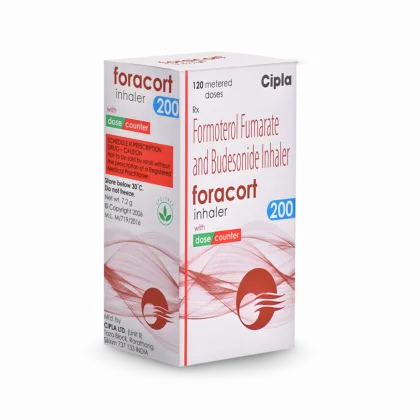
Foracort Inhaler 6/200 mcg
Opens constricted airways and reduces inflammation within the lungs to assist with easier breathing and airflow.
Formoterol (Symbicort) is a long-acting bronchodilator used to manage breathing difficulties in conditions like asthma and chronic obstructive pulmonary disease. Four formulations are listed below, including Foracort Inhaler in two different strengths and Symbicort Turbuhaler in two different strengths, providing various options for consistent airway management.
Opens constricted airways and reduces inflammation within the lungs to assist with easier breathing and airflow.

Combines a corticosteroid to reduce inflammation with a long-acting bronchodilator to open airways for easier breathing.

Addresses airway inflammation and constriction with a dual-acting combination to support easier breathing in chronic respiratory conditions.
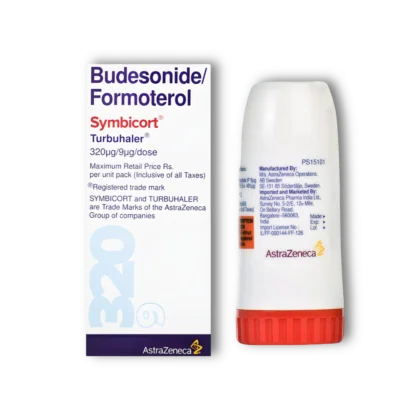
Controls inflammation and opens airways to facilitate easier breathing and reduce the frequency of respiratory flare-ups.
Formoterol belongs to a family of medications known as long-acting beta-agonists. Your doctor might suggest this type of treatment if you need sustained support to keep your airways open throughout the day and night. Unlike short-acting rescue inhalers that provide immediate, brief relief, this compound is designed to work over a longer period to prevent symptoms from starting or becoming severe.
Because this medication is used for chronic respiratory support, you will find it available in different delivery systems, such as pressurized metered-dose inhalers and dry-powder inhalers like the Turbuhaler. These options exist because different people respond better to specific mechanics of delivery. Choosing between these formats often comes down to how easily you can use the device to ensure the medication reaches your lungs effectively.
Products containing this ingredient are strictly regulated as prescription-only medications across global markets including the United States, United Kingdom, Australia, and Canada. Because they directly affect the smooth muscle tissue of your respiratory system, you cannot purchase these items over the counter at a local pharmacy.
Regulatory agencies monitor these products to ensure they meet high standards for potency and delivery consistency. Whether you are in Europe, the Americas, or parts of Asia, the requirement for a healthcare provider’s oversight remains standard. This process ensures the medication is appropriate for your specific lung health profile and that you are using the correct strength for your needs.
This medication is primarily used to address symptoms of asthma and chronic obstructive pulmonary disease (COPD). It is not intended to treat a sudden, acute asthma attack, but instead serves as a maintenance therapy. By consistently managing the narrowing of your airways, it assists with maintaining normal lung function and preventing the wheezing, shortness of breath, and chest tightness that often accompany these conditions.
When you inhale this medication, it binds to specific receptors located on the muscles that wrap around your airways. By activating these beta-2 receptors, it triggers the airway muscles to relax and widen. This process, known as bronchodilation, makes it significantly easier for air to flow into and out of your lungs. This effect typically begins to help within minutes and can provide sustained support for several hours, which is why it is effective for ongoing respiratory management.
Formoterol is part of the beta-2 agonist class of drugs. These substances are specifically engineered to target the muscles in your lungs rather than other areas of your body. Because the medication is localized directly into the respiratory tract, it can achieve airway relaxation with minimal impact on other organ systems.
Most modern lung-health formulations pair this ingredient with an inhaled corticosteroid. This combination approach is common because while formoterol addresses the airway constriction, the paired steroid helps calm the inflammation that causes the airway tissues to become swollen and sensitive in the first place.
Before you begin, ensure that your provider has assessed your heart health, as beta-agonists can occasionally influence heart rate or blood pressure. People with specific conditions like hyperthyroidism, diabetes, or electrolyte imbalances should have a conversation about whether this is the best fit for their needs. Always verify that your current list of medications does not conflict with this compound.
You might notice mild tremoring, a slightly rapid heartbeat, or a dry throat during the first few days of use. These are common physical responses as your body adjusts to the medication. If you experience persistent chest pain, severe dizziness, or paradoxical wheezing—where your breathing worsens immediately after taking a puff—you should stop and seek professional guidance right away.
Other medications, including some blood pressure pills known as beta-blockers, can potentially interfere with how effectively this inhaler works. Similarly, your liver or kidney processing capacity may be considered by a doctor if they are monitoring how your body clears active compounds. Product labeling and verified clinical sources remain the correct references for specific contraindications, interactions, and potential reactions.
This information provides a general overview of formoterol and is not intended to serve as medical advice. Individual products containing this ingredient may differ in formulation, strength, and directions for use. This page does not authorize clinical application, self-directed interpretation, or unsupervised use of respiratory medications. Readers should review individual product labeling and speak with a healthcare professional when clinical judgment is needed to address specific lung health concerns.
Jun 12, 2026 ⋅ 5 min read
A guide comparing common respiratory medication classes, focusing on mechanisms, onset, and patient factors considered by healthcare professionals during treatment selection.
Jun 12, 2026 ⋅ 7 min read
A clinical overview of potential side effects, adverse reactions, contraindications, and drug interactions associated with common classes of respiratory medications.
Jun 12, 2026 ⋅ 6 min read
An overview of common respiratory medications, including how they work to manage conditions like asthma and COPD, their main classes, and safety considerations.
Jun 12, 2026 ⋅ 6 min read
An overview of common respiratory medication classes, explaining how different drugs manage airway conditions by targeting specific biological pathways.