
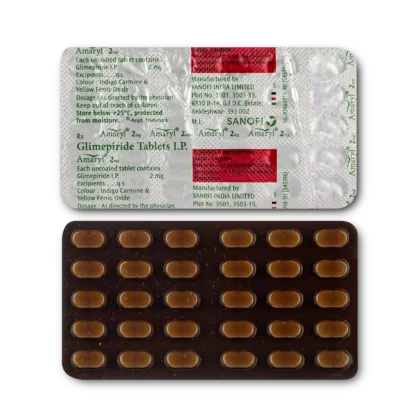
Amaryl 2 Mg
Supports glucose management by stimulating the pancreas to release insulin, helping maintain healthy blood sugar levels.
Glimepiride (Amaryl) is an oral medication categorized as a sulfonylurea, commonly prescribed to manage blood sugar levels in adults with type 2 diabetes. One formulation is available below: Amaryl 2 mg. This medication works alongside diet and exercise to help maintain healthy glucose levels throughout the day.
Supports glucose management by stimulating the pancreas to release insulin, helping maintain healthy blood sugar levels.
You might know glimepiride by its originator name, Amaryl. It belongs to a family of medicines called sulfonylureas. Unlike some other diabetes medications that work primarily by making your cells more sensitive to insulin, this compound focuses on the source of the hormone itself. It acts as a stimulant for your pancreas, encouraging the beta cells to release the insulin your body has already produced but isn’t using efficiently.
Healthcare providers often consider this medication when lifestyle changes—such as consistent carbohydrate counting or increased physical activity—aren’t quite enough to reach your target glucose numbers on their own. Because it influences the amount of insulin your body moves into the bloodstream, it is designed for steady, long-term glucose support rather than immediate, short-term blood sugar correction.
Glimepiride is a prescription-only medication in most major global markets, including the United Kingdom, Australia, and across Europe and North America. Because it directly triggers insulin release, it is strictly regulated to ensure that users understand how to coordinate their doses with their daily meal schedules.
In markets like the United States, United Kingdom, Australia, and Canada, you must have a formal assessment from a doctor to ensure this class of medication is appropriate for your specific health profile. The regulatory status reflects the importance of regular monitoring, as the strength of the tablet must be matched to your unique glycemic needs.
This medication is used specifically for the management of type 2 diabetes mellitus. It is intended to help keep blood sugar levels within a healthy range, which reduces the potential for long-term complications related to high glucose levels. It is not used for type 1 diabetes, as that condition requires different therapeutic support to replace missing insulin.
When you take glimepiride, it binds to specific receptors on your pancreatic cells. Think of this as sending a clearer signal to your pancreas that it is time to release insulin into your bloodstream. This added insulin allows your body to transport sugar out of your blood and into your muscle and fat cells, where it serves as essential fuel.
Once the sugar moves out of your blood, your levels naturally drop. Because of this mechanism, it is important that the timing of your medication stays consistent with your eating habits. If you skip a meal while the medication is active, your blood sugar may drop lower than is comfortable for your body.
Glimepiride is part of the sulfonylurea class of antidiabetic agents. These compounds have been used for decades to help people with type 2 diabetes maintain control over their metabolism. They are recognized for their ability to provide a reliable, once-daily option for glucose support.
Members of this class are distinct from modern injectables or newer pill-based medications that target digestive enzymes or kidney processing. The primary characteristic of a sulfonylurea is this direct-action pathway in the pancreas. This targeted approach is why it remains a common tool for healthcare providers managing established insulin-production challenges.
Before starting this medication, ensure your doctor is aware of any preexisting liver or kidney conditions, as these organs are vital for processing and clearing the medication from your system. It is also important to disclose any history of sulfur-based drug allergies.
The most common concern with this class of medication is hypoglycemia, or blood sugar that drops too low. Symptoms can include sudden shakiness, sweating, or dizziness. Keeping a source of fast-acting glucose available is a common standard practice for those managing their levels with this type of insulin-stimulating agent.
Glimepiride can interact with other blood pressure medications, beta-blockers, or even certain over-the-counter supplements. Always provide a full list of your current prescriptions to your provider to avoid competing effects. Product labeling and verified clinical sources remain the correct references for specific contraindications, interactions, and potential reactions.
This information is for educational purposes only and does not serve as medical advice, diagnosis, or a recommendation for use. Individual products containing glimepiride may differ in formulation, strength, and manufacturer instructions. This page does not authorize clinical application, self-directed interpretation, or unsupervised use of any pharmacy product. Please review the specific package labeling provided with your medication and speak with a qualified healthcare professional whenever clinical judgment is required for your health.
Jun 12, 2026 ⋅ 5 min read
An overview of the different classes of diabetes medications, explaining how clinical factors influence treatment selection and the differences between common therapeutic options.
Jun 12, 2026 ⋅ 7 min read
A clinical overview of potential side effects, adverse reactions, contraindications, and drug interactions associated with common diabetes medications.
Jun 12, 2026 ⋅ 6 min read
An overview of common diabetes medication classes, including how they work, their primary indications, and key safety considerations for patients managing blood glucose levels.
Jun 12, 2026 ⋅ 6 min read
An educational overview of common diabetes medication classes, exploring how different drugs manage blood glucose levels through distinct mechanisms of action.