
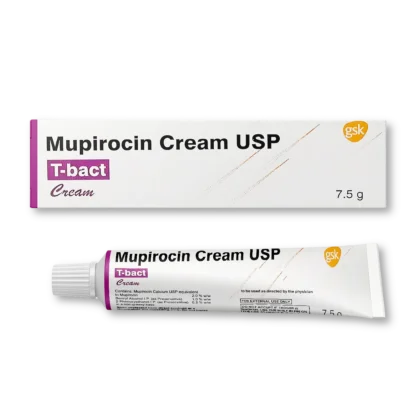
T Bact 7.5 gm Cream
Inhibits bacterial protein synthesis to clear localized skin infections and stop the spread of harmful bacteria.
Mupirocin (Bactroban) is a topical antibiotic used to manage bacterial skin infections. It works directly at the site of infection to stop bacteria from multiplying. One formulation is listed below — T Bact 7.5 gm Cream — providing a standard topical option for addressing localized skin conditions.
Inhibits bacterial protein synthesis to clear localized skin infections and stop the spread of harmful bacteria.
Mupirocin belongs to a class of topical agents that block bacterial protein synthesis. Because it stays primarily on the surface where it is applied, it focuses its action on the specific area of infection rather than affecting your entire system. This targeted approach makes it a common choice for superficial skin issues.
You might have come across the originator brand, Bactroban, when discussing skin care with a professional. Generic versions like T Bact provide the same active compound, offering a way to manage bacterial growth on the skin using the same established mechanism.
Products containing Mupirocin are subject to healthcare regulation across global markets, including North America, Europe, and Australia. In many of these regions, Mupirocin is classified as a pharmacy-only or prescription-required medication. Regulatory status varies based on local policies, but the compound is widely recognized as a standard tool for dermatological infections.
Because regulations change between countries like the United Kingdom, Canada, and Australia, you should verify local availability through a licensed pharmacy. This ensures your access aligns with the clinical guidelines established for your specific location.
This medication addresses primary and secondary bacterial skin infections. It is specifically used to manage impetigo, a common contagious infection that causes red sores on the face or hands. It also supports the management of small traumatic lesions, such as minor lacerations, sutured wounds, or abrasions that have become infected.
By applying it directly to the affected patch of skin, you interrupt the progression of the bacteria. This allows the tissue to heal without the infection spreading to surrounding healthy skin.
Mupirocin works by binding to a specific bacterial enzyme called isoleucyl-tRNA synthetase. Think of this enzyme as a necessary tool the bacteria use to build the proteins they need to survive and copy themselves. By disabling this tool, the antibiotic essentially starves the bacteria of the proteins they require.
When the bacteria can no longer produce new proteins, their growth grinds to a halt. This process gives your body the opportunity to naturally clear the remaining infection while protecting your skin cells from further harm.
Mupirocin represents a unique class of antibiotic compounds derived from the organism Pseudomonas fluorescens. Unlike systemic oral antibiotics that circulate through your whole bloodstream, this class is curated specifically for topical application. This focus helps minimize common systemic side effects that might occur with tablets or capsules.
Its therapeutic value lies in its ability to inhibit the replication of common pathogens like Staphylococcus aureus. By focusing on these specific bacteria, the compound stays effective where bacterial resistance might develop with other broader-spectrum treatments.
Always perform a quick assessment of your skin’s reaction when starting a new topical treatment. If you have a known sensitivity to any of the ingredients in the cream base, you should avoid using it until you have spoken with a provider.
Most people tolerate topical Mupirocin well, as it is not absorbed into the bloodstream in significant amounts. You might experience mild stinging, itching, or local redness at the application site. If these symptoms become uncomfortable or do not fade, discontinue use and seek further guidance.
Mupirocin is meant for external, localized use only. Avoid getting the product in your eyes or sensitive mucous membranes, and do not combine it with other topical preparations unless instructed by your provider. Product labeling and verified clinical sources remain the correct references for specific contraindications, interactions, and potential reactions.
This page provides an educational overview of Mupirocin and is not intended to serve as medical advice. Individual products listed here may differ in strength, inactive ingredients, or intended use. This information does not authorize personal clinical application, self-directed interpretation of symptoms, or unsupervised medical treatment. You should review specific product labeling and speak directly with a qualified healthcare professional whenever clinical judgment is required for your health.

Jun 12, 2026 ⋅ 5 min read
A professional overview of common side effects, adverse reactions, contraindications, and potential interactions associated with antibiotic medications.
Jun 12, 2026 ⋅ 6 min read
A guide to understanding antibiotics, their classifications, mechanisms of action, and core safety considerations for patients seeking information on bacterial infections.
Jun 12, 2026 ⋅ 5 min read
Understand how healthcare professionals differentiate between various antibiotic options, including factors like efficacy, dosage forms, and patient-specific needs.
Jun 12, 2026 ⋅ 6 min read
An overview of how various skin care medications are evaluated and selected based on clinical factors like efficacy, onset of action, and patient-specific needs.
Jun 12, 2026 ⋅ 6 min read
A clinical guide regarding the safety profiles, common side effects, and potential risks associated with topical skin care medications.
Jun 12, 2026 ⋅ 6 min read
An overview of common skin care medications, covering major drug classes, their mechanisms of action, primary uses, and essential safety considerations for patients.