
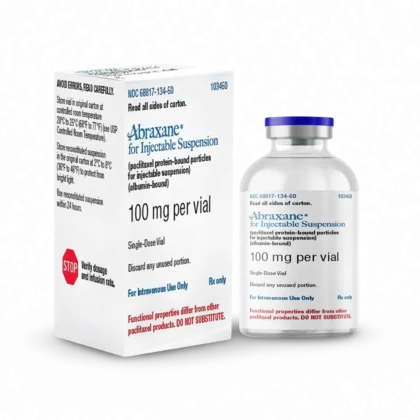
Abraxane 100 Mg Injection
Disrupts cancer cell division by stabilizing the internal scaffolding of cells to stop tumor growth.
Paclitaxel Protein-bound—the active compound in Abraxane—is a specialized chemotherapy formulation used to treat various types of cancer. By binding the medication to albumin, a natural protein, this approach allows for effective delivery of the treatment throughout the body. One formulation is listed below, which is the Abraxane 100 Mg Injection.
Disrupts cancer cell division by stabilizing the internal scaffolding of cells to stop tumor growth.
This medication is a taxane, a family of compounds that interfere with the normal function of cells by stabilizing internal structures known as microtubules. When these structures are locked in place, the cell cannot divide correctly, which effectively halts the growth of malignant tumors. By using albumin as a carrier, the medicine can travel through your bloodstream more efficiently and reach targeted tissues with greater precision.
You might be familiar with the brand name Abraxane, which is the originator product for this specific albumin-bound form. The design of this medication was intended to improve upon older versions of taxane therapies by removing the need for certain solvents that some people reacted poorly to. This allows the compound to be administered in a way that aims to maximize its therapeutic impact while managing how your body experiences the treatment.
Products containing this ingredient are considered high-potency pharmaceuticals and are strictly regulated. Because this medication belongs to a class of cytotoxic treatments, it is used exclusively under the supervision of medical professionals in oncology settings. Access to these products across the United States, United Kingdom, Australia, and Canada requires professional handling and clinical oversight.
Regulations ensure that the quality, stability, and sterility of the protein-bound injection are maintained from the point of manufacturing to the bedside. Whether you are in Europe or North America, you will find consistent standards for how these medications are distributed and stored. These safety mandates exist to protect the integrity of the compound and ensure it is handled correctly by trained staff.
This medication is used to manage several types of advanced or metastatic cancers. It is often utilized when other primary treatments have not achieved the desired results or when a specific, targeted approach is needed to manage disease progression. Physicians use it to address symptoms and slow the spread of malignant cells in specific tissues, such as the breast, lungs, or pancreas.
The goal when using this therapeutic is to disrupt the cycle of rapid cell division that characterizes tumor growth. By focusing on the structural stability of the cells, the medicine assists with controlling aggressive forms of the disease. It is a fundamental component of various clinical care pathways, tailored to the specific needs of the individual receiving treatment.
When it enters your system, the albumin-bound particles act like a trojan horse, helping the medication penetrate tumor sites more effectively. Once inside the malignant cells, the paclitaxel prevents the cell from breaking down its internal framework, which is a required step for a cell to replicate. Because the cell cannot finish the division process, it eventually stops growing and may begin to die off.
Think of it as a specialized brake system for cell growth. By preventing the microtubules from functioning, you essentially lock the cell in a state where it cannot multiply. This mechanism is especially helpful against cancer cells, which are constantly dividing and relying on these internal structures to maintain their rapid pace of expansion.
This medication is part of the taxane family, a group of substances derived from plant sources or synthetic replicas that possess potent anti-tumor properties. Taxanes are known for their ability to bind to the protein tubulin, which is the building block of the cellular scaffolding inside your body. This chemical interaction is what defines the efficacy of the entire class.
Members of this drug class are widely relied upon in oncology because they offer a consistent way to target fast-growing cells. While they all share the same mechanism of interfering with division, the addition of proteins or other carriers in formulations like this one serves to shift how the medication moves through your system. This makes the drug class versatile for different stages of clinical application.
This overview provides educational information about Paclitaxel Protein-bound and is not medical advice. Individual products containing this ingredient may differ in formulation, strength, and specific directions for administration. This page does not authorize clinical application, self-directed interpretation, or unsupervised use of chemotherapy medications. Readers should review individual product labeling and speak with a healthcare professional when clinical judgment is needed to determine the correct use for their specific health requirements.
Jun 12, 2026 ⋅ 6 min read
A plain-language guide to types of cancer treatment medications, how they function, and general considerations for managing therapy safely and effectively.
Jun 12, 2026 ⋅ 6 min read
An analytical overview of how oncologists select cancer treatments, focusing on clinical guidelines, efficacy profiles, dosage forms, and patient-specific variables.
Jun 12, 2026 ⋅ 6 min read
An overview of common cancer treatment medication classes, explaining their mechanisms of action and how different types target specific biological pathways in cancer cells.