
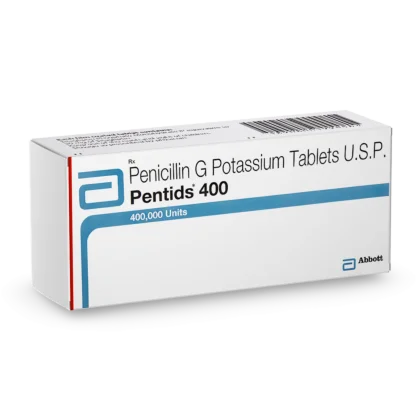
Pentids 400 mg
Targets specific bacterial cell walls to inhibit growth and manage various localized or systemic infections.
Phenoxymethylpenicillin, commonly referred to as penicillin V, is a well-established antibiotic used to manage a range of bacterial infections. It belongs to the penicillin family and remains a standard choice for respiratory, skin, and dental infections. One formulation, Pentids 400 mg, is available as part of our catalog.
Targets specific bacterial cell walls to inhibit growth and manage various localized or systemic infections.
Phenoxymethylpenicillin is a naturally occurring penicillin derivative. Because it survives the acidic environment of your stomach better than natural penicillin G, it is highly effective when taken by mouth. You will often find it prescribed for infections that are known to be sensitive to the penicillin group.
Developing different delivery strengths like the 400 mg tablet allows you and your healthcare provider to select an option that matches the severity of the bacteria being addressed. It is a staple in medical care because it provides a reliable, targeted approach to clearing infections that range from strep throat to minor skin issues.
Access to penicillin-based antibiotics is strictly regulated to ensure they are used appropriately. In markets across the United States, United Kingdom, Australia, and Canada, phenoxymethylpenicillin is almost exclusively a prescription-only medication. This classification exists because physicians must accurately diagnose the underlying bacterial cause before starting a course of treatment.
Regulatory requirements may differ slightly depending on where you are located. While these medications are widely available in pharmacies, they are restricted to ensure they are used only for proven bacterial infections, which helps prevent the development of antibiotic resistance. Always ensure the product originates from a verified, regulated source.
This medication is primarily used to address mild to moderate bacterial infections. It is a go-to choice for managing streptococcal infections, including tonsillitis and scarlet fever. It also assists in preventing the recurrence of rheumatic fever.
Beyond throat infections, it is frequently used in the care of dental abscesses and certain skin conditions, such as cellulitis. By stopping the spread of specific bacteria, it gives your immune system the space it needs to resolve the infection effectively.
Phenoxymethylpenicillin works by disrupting the way bacteria build their protective cell walls. Bacteria rely on these walls to stay intact and survive. When you take the medication, it interferes with the final stages of the cell wall synthesis.
Without a stable cell wall, the bacteria swell and eventually burst. Because human cells do not have these same wall structures, the medication can target the bacteria specifically without directly interfering with your own cells. This makes it a highly focused tool for managing active bacterial growth.
Phenoxymethylpenicillin belongs to the beta-lactam class of antibiotics. These compounds are unified by a specific chemical structure known as the beta-lactam ring, which is the key component responsible for breaking down bacterial defenses.
Members of this family are recognized for their selectivity and reliability. They have been a cornerstone of modern medicine for decades, providing a foundation for treating common infections throughout the world. Because of their long history, the way these drugs interact with your body is well-documented and predictable.
Before you start any course of penicillin, it is vital to check if you have a known history of hypersensitivity to penicillin or any other beta-lactam antibiotics. If you have ever experienced an allergic reaction to these drugs, you must avoid them, as reactions can be severe.
Common reactions to this medication often involve the digestive system, such as nausea or mild stomach discomfort. More serious reactions, while less frequent, can include skin rashes or signs of a serious allergic response. If you notice any unusual symptoms, pause the course and observe how your body responds.
Your liver and kidneys play a role in how this medication is processed and cleared from your system. If you have existing kidney or liver conditions, this information should be shared with a provider. Furthermore, mention other medications you are taking, as certain supplements or treatments may interact with how your body absorbs or clears this antibiotic. Product labeling and verified clinical sources remain the correct references for specific contraindications, interactions, and potential reactions.
This information is for educational purposes only and does not serve as medical advice, diagnosis, or a substitute for professional clinical guidance. Individual products containing phenoxymethylpenicillin may differ in strength, formulation, and usage directions. This platform does not authorize or encourage self-directed treatment or the unsupervised use of antibiotics. Always review the specific product labeling and consult with a healthcare professional to determine if a medication is appropriate for your health needs.

Jun 12, 2026 ⋅ 5 min read
A professional overview of common side effects, adverse reactions, contraindications, and potential interactions associated with antibiotic medications.
Jun 12, 2026 ⋅ 6 min read
A guide to understanding antibiotics, their classifications, mechanisms of action, and core safety considerations for patients seeking information on bacterial infections.
Jun 12, 2026 ⋅ 5 min read
Understand how healthcare professionals differentiate between various antibiotic options, including factors like efficacy, dosage forms, and patient-specific needs.
Jun 12, 2026 ⋅ 5 min read
An educational overview of common antibiotic drug classes, exploring how these medications function, their typical clinical applications, and the distinct characteristics of each major group.