
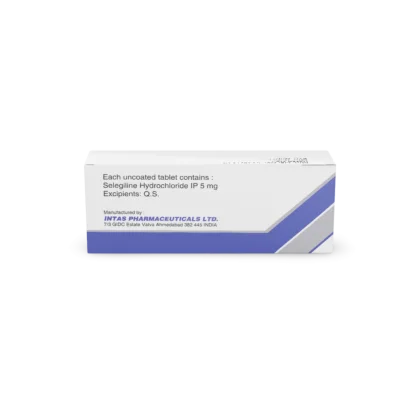
Selgin Tablet 5 Mg
A selective inhibitor that maintains dopamine levels in the brain to support motor control and movement.
Selegiline — known by originator brands like Eldepryl and Zelapar — is a medication used to help manage symptoms of Parkinson’s disease and major depressive disorder. Because different manufacturers produce various tablets, you may encounter several options within this category. One formulation, Selgin 5 mg, is currently listed for your review.
A selective inhibitor that maintains dopamine levels in the brain to support motor control and movement.
Selegiline belongs to a class of medications called monoamine oxidase inhibitors (MAOIs). Specifically, it acts as a selective, irreversible inhibitor of monoamine oxidase-B (MAO-B). By blocking this enzyme, the medication slows the breakdown of dopamine in your brain. For many people, this process helps maintain higher levels of the neurotransmitter, which is essential for smooth movement and mood stability.
Researchers developed this compound to provide a more targeted approach than earlier, non-selective MAOIs. Because it focuses primarily on the B-type enzyme at lower concentrations, it addresses specific neurological pathways while typically minimizing certain systemic effects. You will find it used as both an early-stage monotherapy and as an add-on treatment alongside other standard Parkinson’s medications.
Products containing this compound are subject to medical supervision across international markets including the United States, United Kingdom, Australia, and Canada. Because it is a potent inhibitor, it is almost universally classified as a prescription medication. Requirements for accessing it vary depending on local health ordinances in the specific country where you reside.
Regulations are in place to ensure that your healthcare provider can evaluate your current medications and health history before use. Since this compound interacts with various common substances—from specific foods to other antidepressants—regulatory boards emphasize the importance of professional oversight. Always follow the guidance of your local pharmacist or physician regarding legal access and availability in your region.
This medication is primarily used to address the motor symptoms associated with Parkinson’s disease, such as tremors, stiffness, and slow movement. It assists in extending the therapeutic window of other compounds like levodopa, which is often prescribed in combination. By increasing dopamine availability, it helps restore better control over physical coordination.
Beyond motor control, specialists sometimes use Selegiline to manage major depressive disorder. In this context, it acts on neurotransmitter pathways to help lift mood and ease depressive symptoms. Clinical teams monitor how you respond to these effects to determine the most effective strategy for your specific health needs.
The primary role of this compound is to protect the chemical signals between your nerve cells. Normally, your brain produces an enzyme called MAO-B that degrades dopamine over time. By inhibiting this enzyme, the medication prevents that degradation, keeping more dopamine active in the synapse—the space where nerve cells communicate.
Think of it as a way to preserve your brain’s natural supply of dopamine rather than replacing it directly. When the levels of this neurotransmitter stay elevated for longer, your brain can manage motor signals with greater consistency. This mechanism is particularly helpful as nerve cell production of dopamine begins to decline.
Selegiline is a member of the monoamine oxidase inhibitor family, a group of medications recognized for their ability to modify brain chemistry. While older members of this class interacted broadly with many bodily functions, modern iterations like this one are designed with higher selectivity. This allows them to focus on specific enzymes, which is a hallmark of current pharmacological development.
This class is widely studied for its neuroprotective potential, meaning researchers look at how these compounds might support nerve cell longevity. The focus remains on modulating the chemical environment of the brain to improve how you transmit vital signals. Understanding this class helps clarify why your provider may need to be cautious about other medications you take.
Before starting, ensure your healthcare provider has a list of every other medication or supplement you use. This is essential because of potential interactions with cold medicines, certain antidepressants, and foods high in tyramine. Inform your team if you have a history of liver or kidney impairment, as these conditions influence how your body processes the compound.
You may notice different physical responses while your system adjusts to the increase in neurotransmitter activity. Common concerns often revolve around digestive changes, dizziness upon standing, or sleep disturbances. These reactions are often manageable, but they should be reported to your healthcare provider to help them adjust your approach if necessary.
Avoid combining this medication with other serotonin-altering agents without explicit approval, as doing so may lead to serious health complications. Your liver metabolism plays a significant role in clearing the compound, meaning that pre-existing health factors could necessitate a different dosage strategy. Product labeling and verified clinical sources remain the correct references for specific contraindications, interactions, and potential reactions.
This page provides an educational overview of Selegiline and is not medical advice. Individual products containing this compound may differ significantly in formulation, strength, and directions for use. This page does not authorize clinical application, self-directed interpretation, or unsupervised use of any listed medication. You should always review official product labeling and speak with a qualified healthcare professional whenever clinical judgment or individualized medical advice is needed.