
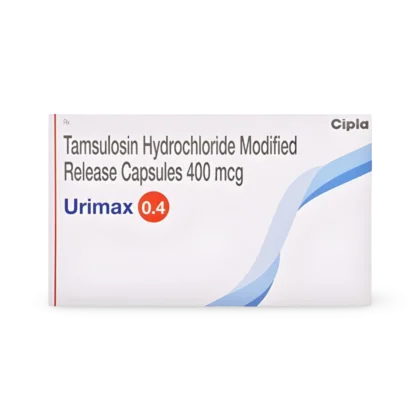
Urimax 0.4 mg
Relaxes smooth muscle tissue in the prostate and bladder neck to improve urinary flow and reduce discomfort.
Tamsulosin is the active compound found in medications like Flomax, regularly used to assist with the symptoms of an enlarged prostate. It works to improve urinary flow for those dealing with discomfort. Two formulations are listed below — Urimax 0.4 mg and Veltam 0.2 Tablet MR — covering different strength options.
Relaxes smooth muscle tissue in the prostate and bladder neck to improve urinary flow and reduce discomfort.

Relaxes the smooth muscles in the prostate and bladder neck to improve urinary flow and comfort.
Tamsulosin belongs to a group of medications known as alpha-blockers. You will typically find it used for conditions involving the prostate, specifically when the gland grows large enough to interfere with your ability to urinate comfortably. By targeting the specific muscles that control your urinary tract, it helps address the underlying tension that causes a weak stream or a constant urge to go.
Many people search for this compound because it provides a reliable way to manage daily urinary symptoms without immediate surgical intervention. Because it acts selectively on the prostate and bladder neck, it is designed to relieve pressure without affecting your blood pressure in the way that broader, older alpha-blockers once did.
Products containing tamsulosin are subject to healthcare regulations across the United States, United Kingdom, Australia, and Canada, as well as several other international markets. Because it is a potent medication that influences muscle tone, it generally requires a healthcare professional’s assessment to determine if it is appropriate for your specific health situation.
Regulation levels can vary slightly by region, with some countries classifying it as a strict prescription item, while others may allow for pharmacy-led supply in certain contexts. Always confirm the local requirements in your specific area before requesting a supply of these medications.
This medication is primarily used to address symptoms of benign prostatic hyperplasia (BPH). This is a non-cancerous condition where your prostate gland increases in size. As the gland grows, it can squeeze the urethra, which makes passing urine difficult.
Tamsulosin assists by easing these symptoms, such as the need to wake up multiple times at night or the feeling that you cannot fully empty your bladder. It helps you manage these daily disruptions, allowing for a more natural and comfortable urinary pattern.
Tamsulosin works by blocking specific receptors known as alpha-1 receptors found in the smooth muscle of your prostate and the bladder neck. When these receptors are blocked, the muscles around your bladder exit relax. Think of it as opening a door that has been partially closed; once the tension is lifted, urine flows from the bladder much more freely.
Because this medication is highly selective, it specifically targets the urinary tract. This precision means you can often achieve relief from urinary hesitancy or urgency while minimizing the impact on your blood pressure or other systems in your body.
Tamsulosin is a member of the alpha-1 adrenoreceptor antagonist class. These compounds are united by their ability to inhibit the physical response to certain nerve signals that would otherwise cause smooth muscle contraction. By preventing this “tightening” effect, the class provides relief in various tissues, though tamsulosin is specifically optimized for prostate health.
These medications are widely recognized for their role in improving quality of life for those with prostate-related urinary issues. They represent a more targeted approach compared to previous generations of drugs that affected muscles throughout the entire body, allowing for a focused, localized effect.
Before using tamsulosin, ensure your healthcare provider is aware of your complete medical history, especially if you have ever had low blood pressure or issues with dizziness. It is also important to mention any upcoming surgeries, such as cataract operations, as this medication can influence the way these procedures are performed.
Common experiences reported with this class of medication include dizziness or lightheadedness, particularly when you stand up quickly after sitting or lying down. This occurs because the relaxation of your blood vessels may cause a temporary drop in pressure. Most people adjust to this feeling over time, but you should take care when transitioning from a sitting position.
Tamsulosin must be managed carefully if you are already taking other medications that influence blood pressure, as combining them can cause unexpected dizziness. It is also processed by your liver, so let your provider know if you have any history of liver or kidney impairment. Product labeling and verified clinical sources remain the correct references for specific contraindications, interactions, and potential reactions.
Alpha-blocker : A medication that relaxes specific muscles by preventing nerve signals from causing them to tighten.
Benign Prostatic Hyperplasia (BPH) : A common, non-cancerous enlargement of the prostate gland that often causes urinary difficulties.
Smooth Muscle : The type of involuntary muscle tissue found in your internal organs, such as the bladder and prostate, which is not under your conscious control.
This page provides an educational overview of tamsulosin and does not constitute medical advice, diagnosis, or treatment. Individual products containing this ingredient may vary in formulation, strength, and manufacturer instructions. Please note that this page does not authorize the clinical application, self-directed interpretation, or unsupervised use of any medication. You should always review individual product labeling and consult with a qualified healthcare professional when clinical judgment is needed regarding your health.
Jun 12, 2026 ⋅ 6 min read
A comparative overview of common medications for men's health conditions, focusing on mechanism, clinical use, and patient-specific factors for informed decision-making.
Jun 12, 2026 ⋅ 6 min read
An overview of side effects, safety risks, and potential drug interactions associated with common men's health medications, including those for prostate and hormone therapy.
Jun 12, 2026 ⋅ 6 min read
This guide provides an overview of common medications used in men's health, covering their indications, mechanisms of action, and essential safety information for patients.
Jun 12, 2026 ⋅ 5 min read
An educational overview of common medication classes used in men's health, explaining how they function and their typical clinical applications.