
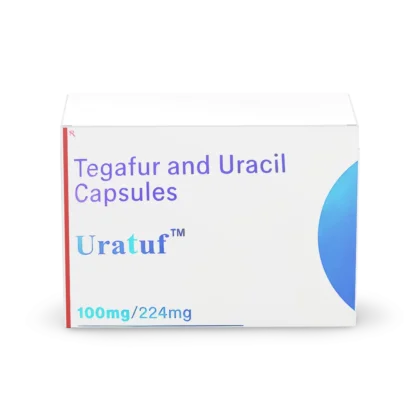
Uratuf (100+224) Mg Capsules
Combines two active compounds to disrupt cancer cell division by blocking the synthesis of essential genetic material.
Tegafur is a systemic chemotherapy agent frequently paired with other compounds to ensure its stability and potency within the body. It acts as a prodrug, meaning the body metabolizes it into its active form to target specific cellular pathways. Currently, one formulation is listed below, which is the Uratuf 100+224 mg capsule.
Combines two active compounds to disrupt cancer cell division by blocking the synthesis of essential genetic material.
You might think of Tegafur as a specialized tool for oncological care. It belongs to the class of antimetabolites—compounds that mimic the building blocks of DNA. By tricking rapidly dividing cells into absorbing these false building blocks, the medication halts the progression of abnormal cell growth.
Developing these treatments requires precise combinations, which is why you will often see it paired with other substances. These combinations help your system maintain steady levels of the active medication, ensuring it performs its intended role effectively while reducing the likelihood of rapid breakdown before it reaches the targeted sites.
Access to chemotherapy agents varies significantly across the globe. In jurisdictions such as the United States, United Kingdom, Australia, and Canada, these medications are strictly regulated and typically restricted to hospital or clinical oncology settings. These classifications ensure that a professional oversees the duration and conditions of administration.
Regulations exist to protect you, as chemotherapy requires specialized monitoring of clinical blood markers. Because health systems in countries like Japan or various European nations may have different approval pathways for oral cytostatic agents, availability can depend on your specific location. Always confirm the regional requirements for this compound before seeking access through any pharmacy channel.
Medical professionals use Tegafur to manage various types of solid tumor cancers, particularly those affecting the gastrointestinal tract and breast tissue. It serves as a mainstay in protocols where oral administration is preferred over intravenous methods. By disrupting the synthesis of thymidylate—a molecule essential for DNA replication—it effectively slows or stops the spread of malignant cells.
Think about how your body processes nutrients. When you take this medication, your liver converts it into fluorouracil, the active compound that interferes with cellular function. This conversion is the mechanism that allows it to exert an effect on systemic tumor progression without needing a direct infusion.
By entering the bloodstream and traveling to tissues throughout your system, the active components integrate into the machinery of dividing cells. This triggers a stop-signal in the cell division process. Because cancer cells replicate much faster than your healthy cells, this mechanism disproportionately affects malignant growth, helping to suppress tumor expansion over time.
Tegafur is part of the fluoropyrimidine class, which has been a pillar of cancer research for decades. These medicines are defined by their ability to undermine the genetic repair mechanisms that aggressive cells rely on to survive. By hindering the enzyme thymidylate synthase, the medications in this class force a state of biological depletion that these abnormal cells cannot overcome.
This class is well-characterized in clinical literature for its systemic reach. Because it travels through the circulatory system, it reaches sites that might be harder to address with localized treatments. Researchers continue to evaluate how these compounds can be further refined to improve patient tolerability while maintaining their potent impact on abnormal cell reproduction.
Your clinical team must evaluate your full medical history, specifically focusing on your blood count, as this medication can influence bone marrow function. It is essential to ensure your liver and kidneys are functioning within normal ranges, as they play the primary role in processing the compound. Always discuss whether you have a pre-existing deficiency in the enzyme DPD, which is critical for how the body breaks down fluoropyrimidines.
Because this medicine targets rapidly dividing cells, it may impact healthy cells that normally renew quickly, such as those in your skin or digestive lining. Common observations include fatigue or changes in appetite. These reactions depend heavily on your individual physiology and the specific protocol prescribed by your oncologist.
Certain medications can alter the speed at which your body clears this agent, potentially increasing the concentration of the active compound in your blood. It is essential to provide your healthcare team with a complete list of any other supplements or prescription medicines you are taking. Product labeling and verified clinical sources remain the correct references for specific contraindications, interactions, and potential reactions.
This content provides an educational overview of Tegafur; it does not constitute medical advice, diagnosis, or treatment. Individual products containing this ingredient may differ in formulation, strength, and directions for administration. This page does not authorize the clinical application, self-directed interpretation, or unsupervised use of chemotherapy agents. You should review individual product labeling and speak with a qualified healthcare professional when clinical judgment or medical guidance is needed.
Jun 12, 2026 ⋅ 6 min read
A plain-language guide to types of cancer treatment medications, how they function, and general considerations for managing therapy safely and effectively.
Jun 12, 2026 ⋅ 6 min read
An analytical overview of how oncologists select cancer treatments, focusing on clinical guidelines, efficacy profiles, dosage forms, and patient-specific variables.
Jun 12, 2026 ⋅ 6 min read
An overview of common cancer treatment medication classes, explaining their mechanisms of action and how different types target specific biological pathways in cancer cells.