
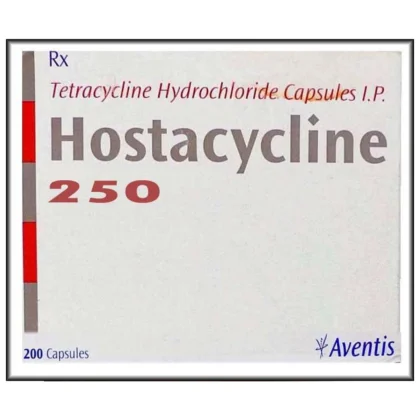
Hostacycline 250 mg
Targets protein production within bacteria to stop their growth and expansion across different tissues.
Tetracycline (Sumycin) is a foundational broad-spectrum antibiotic that has been used for decades to manage various bacterial infections. By stopping the growth of bacteria, it addresses issues like acne and respiratory tract ailments. Two formulations are listed below — Hostacycline 250 mg and Hostacycline 500 mg — offering options for different therapeutic requirements.
Targets protein production within bacteria to stop their growth and expansion across different tissues.

Targets bacterial protein synthesis with tissue persistence that enables broad-spectrum management of various infection types.
You might think of this compound as a classic workhorse in the world of medicine. Tetracycline belongs to a family of antibiotics designed to treat a wide array of bacterial conditions by preventing the microorganisms from multiplying. It remains a notable choice for conditions where specific bacterial growth needs to be halted effectively.
Because this compound is available in various strengths, you can find options tailored to different clinical needs. The generic versions, such as Hostacycline, provide consistent delivery of the active substance, ensuring that you receive the same medicinal quality regardless of the brand name on the label.
Access to this medication is regulated to ensure that it is used correctly for confirmed bacterial infections. In major pharmacy markets including the United States, United Kingdom, Australia, Canada, and other regions, this substance is typically classified as a prescription-only medication. This means you need a healthcare professional’s assessment to determine if it is appropriate for your specific health situation.
While regulatory standards remain consistent across these territories, specific pharmacy laws can influence how you access your medication. In many regions, you will need a valid prescription from a local or verified provider to obtain the required quantity from an authorized pharmacy. This oversight is intended to support the responsible use of antibiotics and protect your long-term health.
Tetracycline is used to address a variety of bacterial infections that affect different parts of your body. It is frequently associated with the management of skin conditions like acne, where it helps lower the bacterial load on your skin. Additionally, it is used for respiratory tract infections, urinary tract issues, and certain infections of the eye or lymph nodes.
Beyond these common applications, the antibiotic is sometimes used for specific types of infections transmitted through contact, as well as recurring respiratory problems. By addressing the underlying bacterial presence, it assists your system in recovering from the acute symptoms associated with these infections.
Think of this medication as a blocker of bacterial machinery. Bacteria need to produce specific proteins to build their cell walls and grow; tetracycline interrupts this process by binding to the bacterial ribosome—the cellular factory responsible for protein synthesis. When these factories are jammed, the bacteria can no longer multiply or thrive.
Once the bacteria stop reproducing, your immune system has a much easier time clearing the remaining infection naturally. This mechanism makes it a potent tool against a wide spectrum of both Gram-positive and Gram-negative bacteria, which are categories doctors use to group bacteria based on their cell wall structure.
Tetracycline belongs to the tetracycline-class antibiotics, a group defined by a shared chemical structure consisting of four hydrocarbon rings. This architecture is what allows them to integrate so easily into the bacterial protein production process. The entire class is known for being broad-spectrum, meaning one medication can target a diverse range of bacterial strains.
Most members of this class share similar properties, such as their ability to be absorbed into your bloodstream to reach the site of an infection. Because they share this fundamental chemistry, they are often grouped together in clinical practice when a provider is choosing an antibiotic that covers a wide variety of potential bacterial triggers.
Before starting this medication, ensure you discuss any known allergies to antibiotics with your provider. It is also important to tell your doctor if you have had recurring liver or kidney health challenges, as these organs are vital for how your body processes and clears the medication. Avoid taking this medicine if you are pregnant or breastfeeding unless explicitly guided by a professional.
You might find that this medication increases your sensitivity to sunlight, making it easier to develop a sunburn or skin irritation. Some people also report mild digestive discomfort, such as nausea or stomach upset. If you notice any unusual changes in your skin or severe digestive symptoms, reach out to a healthcare provider promptly.
Tetracycline is known to interact with certain minerals, such as calcium, magnesium, and iron. Taking dairy products, antacids, or mineral supplements within a few hours of your dose can interfere with how your body absorbs the medication. Always check with your pharmacist about timing your doses around meals or other supplements to ensure it works as intended. Product labeling and verified clinical sources remain the correct references for specific contraindications, interactions, and potential reactions.
This overview provides educational information about Tetracycline and is not medical advice or a substitute for expert clinical judgment. Individual products containing this ingredient may differ in formulation, strength, and clinical directions. This page does not authorize clinical application, self-directed interpretation, or unsupervised use of any antibiotic. You should always review the specific labeling provided with your medication and speak with a healthcare professional when clinical decisions or health management are required.

Jun 12, 2026 ⋅ 5 min read
A professional overview of common side effects, adverse reactions, contraindications, and potential interactions associated with antibiotic medications.
Jun 12, 2026 ⋅ 6 min read
A guide to understanding antibiotics, their classifications, mechanisms of action, and core safety considerations for patients seeking information on bacterial infections.
Jun 12, 2026 ⋅ 5 min read
Understand how healthcare professionals differentiate between various antibiotic options, including factors like efficacy, dosage forms, and patient-specific needs.
Jun 12, 2026 ⋅ 5 min read
An educational overview of common antibiotic drug classes, exploring how these medications function, their typical clinical applications, and the distinct characteristics of each major group.