
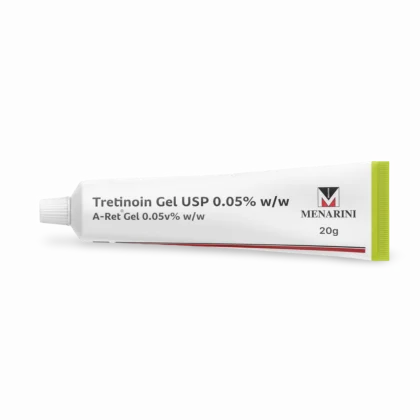
A Ret Gel 0.025% (20 gm)
Accelerates skin cell renewal to clear blocked pores, fade acne marks, and smooth surface lines.
Tretinoin (Retin-A) is a powerful derivative of Vitamin A commonly used in dermatology to treat acne and address signs of skin aging. Eight formulations are listed below, covering options like A Ret, Revize Micro, and Triluma, available in various concentrations and delivery forms such as gels, creams, solutions, and capsules.
Accelerates skin cell renewal to clear blocked pores, fade acne marks, and smooth surface lines.
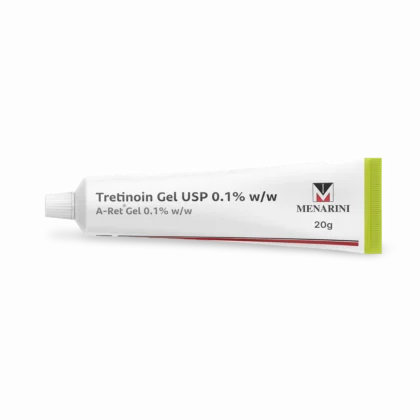
Accelerates skin cell turnover to clear blocked pores, smooth texture, and reduce the appearance of fine wrinkles.
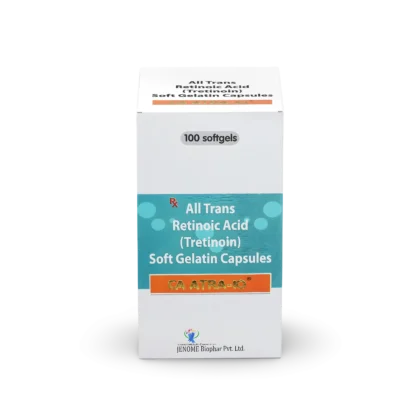
Accelerates skin cell renewal to clear blocked pores, fade acne marks, and smooth surface skin lines.
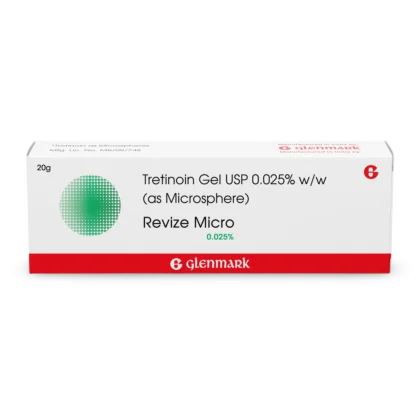
Accelerates skin cell turnover to clear blocked pores, fade acne marks, and smooth surface skin texture.
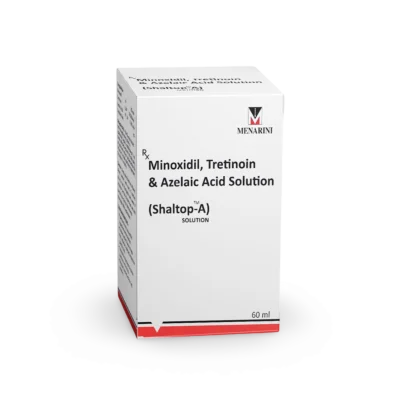
Combining localized stimulation for hair follicles with accelerated cell turnover to clear pores and refine skin texture.
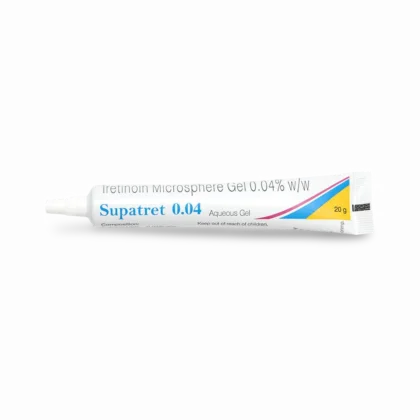
Accelerates skin cell renewal to clear blocked pores, fade acne marks, and smooth surface lines.
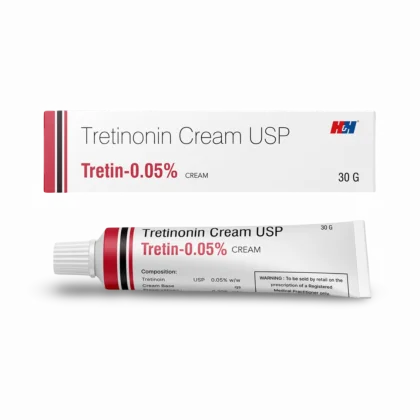
Accelerates skin cell renewal to clear blocked pores, fade acne marks, and smooth surface lines.
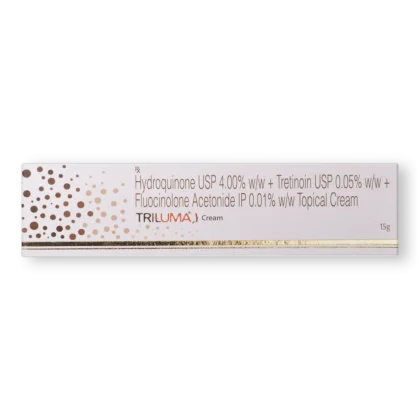
Addresses skin discoloration by slowing melanin production, reducing inflammation, and accelerating the natural cycle of skin turnover.
Tretinoin is a retinoid, a class of chemical compounds related to Vitamin A that play a central role in how your skin behaves at a cellular level. Unlike over-the-counter retinol products, which the skin must convert into active acid through a multi-step process, this compound is already in its bioactive form. This makes it significantly more potent and generally more effective for specific dermatological concerns.
You will find this ingredient in various strengths and textures designed to balance efficacy with skin tolerance. Whether it is formulated as a light gel for oily skin or a thicker cream for improved hydration, the active delivery remains focused on changing how skin cells grow and shed. Its primary goal is to normalize the environment of your skin follicles, which prevents the clogging that leads to breakouts.
Products containing this ingredient are strictly regulated as pharmaceutical agents across international markets. In regions such as the United States, United Kingdom, Australia, and Canada, it almost always requires a prescription from a qualified healthcare professional. Because of its potency and the way it affects skin sensitivity, it is not considered an over-the-counter cosmetic item in most major jurisdictions.
Regulatory standards ensure that these products are tested for stability and concentration consistency. Whether you are browsing options in Europe or North America, you will notice that products are labeled with specific percentage strengths, such as 0.025% or 0.1%. These distinctions are important because the intensity of the effect on your skin scales directly with the concentration of the active compound.
This medication is primarily used to address persistent or severe acne by clearing blocked pores and preventing the formation of new pimples. By encouraging skin cells to turn over more rapidly, it helps keep pore openings clear and reduces the buildup of oil and bacteria.
Beyond acne, it is frequently used to manage signs of photodamage, which is skin damage caused by long-term exposure to sunlight. It smooths out rough skin textures, minimizes the appearance of fine lines, and helps fade areas of irregular pigmentation. Because it speeds up the life cycle of skin cells, it promotes a fresher and more uniform appearance over time.
When applied to the skin, this compound binds to specific receptors inside your skin cells, effectively sending a message to “act younger.” It forces old, damaged skin cells to shed more quickly and signals the deeper layers of the skin to produce new cells at a faster rate. This process is known as increased cell turnover, which is essentially a deep-cleaning mechanism for your pores.
In addition to speeding up renewal, it encourages the production of collagen, a structural protein that keeps your skin firm and elastic. By thinning the buildup of dead skin cells on the surface while stimulating healthier growth underneath, it addresses both the surface-level inflammation of acne and the deeper structural concerns like fine lines.
Tretinoin belongs to the retinoid family, which includes both synthetic and natural derivatives of Vitamin A. Medicines in this class are categorized by their ability to influence cell gene expression, effectively changing how cells differentiate and function. While some retinoids are ingested to treat systemic issues, this specific compound is the gold standard for topical skin applications.
Retinoids represent a unique intervention in medicine because they do not just cover up symptoms; they alter the actual biological behavior of the tissue. Understanding that this class of drugs works by modifying cell growth helps explain why the adjustment period is so important. Your skin requires time to adapt to these chemical signals, which is why clinical practice often suggests starting with lower concentrations to minimize surface irritability.
Before starting this medication, it is essential to consider the current state of your skin and any existing conditions. Retinoids can increase your skin’s vulnerability to ultraviolet light, making sun protection a non-negotiable part of your daily routine. Always disclose any history of eczema, rosacea, or severe skin sensitivity to a professional before beginning a treatment regimen.
Common reactions include dryness, redness, peeling, and a sensation of stinging or warmth upon application. These effects are often most noticeable during the first few weeks of acclimation as your skin adjusts to the rapid cell turnover. Using the medication less frequently or starting with a lower concentration can often help manage these physical sensations during the initial transition.
Avoid using this compound alongside harsh exfoliants, high-concentration alcohol-based toners, or other irritating skincare acids, which can significantly intensify skin inflammation. You should also verify that your other skincare products are compatible with retinoids to avoid unpleasant reactions. Product labeling and verified clinical sources remain the correct references for specific contraindications, interactions, and potential reactions.
This overview provides educational information about Tretinoin and is not a substitute for professional medical advice. Individual products containing this ingredient may differ in formulation, exact strength, and manufacturer directions. This page does not authorize clinical application, self-directed interpretation, or unsupervised use of these medications. Readers should review individual product labeling and speak with a healthcare professional when clinical judgment is needed to ensure the treatment is appropriate for their specific health needs.
Jun 12, 2026 ⋅ 5 min read
A clinical overview of potential side effects, contraindications, and drug interactions associated with common acne treatments to inform patient safety discussions.
Jun 12, 2026 ⋅ 6 min read
An overview of common medications used to manage acne, covering mechanisms of action, active ingredients, and general safety considerations for skin health.
Jun 12, 2026 ⋅ 5 min read
A clinical overview of the safety profile of allergy medications, covering common side effects, adverse reactions, contraindications, and potential drug interactions.
Jun 12, 2026 ⋅ 6 min read
An overview of common allergy medications, including how different drug classes work to manage symptoms, their primary indications, and key safety considerations for patients.
Jun 12, 2026 ⋅ 5 min read
An overview of how different acne treatments work, focusing on how clinicians evaluate options based on efficacy, skin type, and individual patient needs.
Jun 12, 2026 ⋅ 5 min read
An overview of how various allergy medications are categorized and selected for treatment, focusing on evidence-based factors like onset, delivery, and patient needs.