
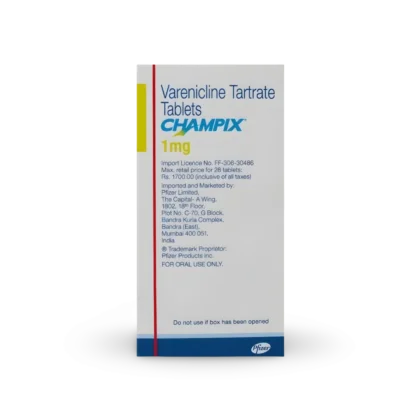
Champix 1 Mg Tablet
Reduces cravings and withdrawal symptoms by blocking nicotine receptors to make quitting smoking more manageable.
Varenicline (Champix) acts as a specialized aid for individuals working to stop smoking. It targets specific receptors in your brain to help manage the physical desire for nicotine. One formulation, Champix 1 Mg Tablet, is listed below to assist you in identifying the product before speaking with your healthcare provider.
Reduces cravings and withdrawal symptoms by blocking nicotine receptors to make quitting smoking more manageable.
You might already recognize Varenicline by its widely known originator brand, Champix. It belongs to a class of compounds called partial nicotine receptor agonists. When you take this medication, it attaches to the same receptors in your brain that nicotine targets, but it produces a much weaker effect.
By occupying these spots, the compound prevents nicotine from binding there if you happen to have a cigarette. This process effectively eases the intensity of withdrawal symptoms and reduces the satisfaction typically associated with smoking. It helps bridge the gap between being a regular smoker and navigating life as a non-smoker.
Products containing Varenicline are subject to healthcare regulation across the United States, United Kingdom, Australia, Canada, and other international markets. Because it is a targeted pharmaceutical, you will generally require a prescription from a licensed healthcare professional to access it.
Regulatory bodies in these regions monitor the supply chain to ensure quality and safety. While availability is standard through pharmacies, requirements often reflect the need for professional supervision while using the compound. Always verify the specific rules and registration status for your local area before seeking or receiving a treatment plan.
The primary use for this compound is smoking cessation. It assists adults who have decided to quit by making the transition more manageable. By reducing the physical craving for nicotine, the medication helps you focus on behavioral changes rather than battling constant physiological urges.
It is typically used as part of a structured program that includes support and counseling. While it addresses the chemical component of dependence, your personal commitment and environmental changes remain the most significant factors in successfully stopping smoking for the long term.
Your brain has specific receptors that trigger a sense of reward and relief when nicotine is present. Varenicline works by binding to these receptors, essentially acting as a placeholder that provides a mild, sustained level of stimulation.
Because it occupies these sites, the “rush” associated with nicotine is significantly diminished if you smoke during treatment. Simultaneously, the compound satisfies the receptor enough to prevent the severe irritability and restlessness often felt when nicotine levels drop. This dual action helps minimize the physiological highs and lows of the quitting process.
Varenicline falls into the family of nicotinic receptor partial agonists. Unlike traditional nicotine replacement therapies that provide external nicotine, this compound interacts directly with your brain’s internal reward pathways.
The goal of this drug class is to decouple the physical act of smoking from the neurochemical reinforcement it provides. By providing a stabilized base of receptor activity, the class aims to lower the “hook” that keeps the habit in place.
Before starting, discuss your full medical history with your provider, especially if you have a history of mood swings, depression, or other mental health conditions. Being clear about any previous experiences with stop-smoking aids is helpful for your doctor to determine if this is the right approach for your physiology.
Some people report vivid dreams or changes in sleep patterns when first starting this regimen. Others may experience mild nausea or digestive discomfort as the body adjusts to the active ingredient. Pay close attention to how you feel during the first few weeks of consistent use.
Your liver and kidneys help process medications, so inform your healthcare worker about any existing conditions affecting these organs. Since this compound interacts with central nervous system receptors, it may also interact with other medications you take. Product labeling and verified clinical sources remain the correct references for specific contraindications, interactions, and potential reactions.
This page offers an educational overview of Varenicline and is not medical advice. Individual products containing this compound may differ in strength, specific formulation, and label instructions. This page does not authorize clinical application, self-directed interpretation, or unsupervised use of any pharmacy item. Readers should review individual product labeling carefully and always speak with a qualified healthcare professional when clinical judgment, diagnosis, or a new treatment plan is needed.