
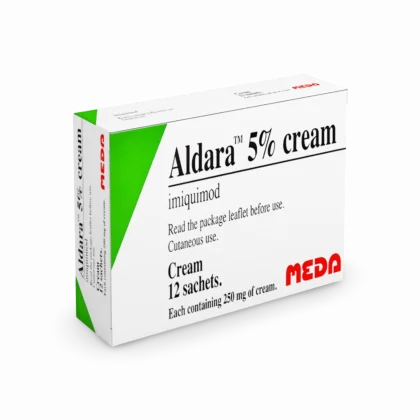
Imiquad Cream 0.5%
Activates your immune system directly at the site of application to recognize and clear abnormal skin cell growths.
 Actinic Keratosis Medications
 Living with actinic keratosis often involves managing changes to your skin that feel both physically irritating and emotionally heavy. These rough patches serve as a reminder of past sun exposure, yet they are treatable with targeted approaches. One formulation is listed below, utilizing immune-modifying properties to assist the skin in clearing damaged cells and promoting natural healing.
Activates your immune system directly at the site of application to recognize and clear abnormal skin cell growths.
Actinic keratosis manifests as small, rough-textured patches on skin areas that have received the most sunlight over your lifetime, such as the face, scalp, ears, and backs of your hands. You may notice them through a persistent sandpaper-like feel. They often begin as spots that feel easier to sense by touch than to see, and they may fluctuate in size or color over time.
These lesions arise when skin cells, known as keratinocytes, are altered by cumulative ultraviolet (UV) radiation. While they are often viewed as precancerous, they represent a signal from your body that your skin requires clinical attention. Addressing these areas effectively is a foundational step in maintaining long-term skin health and preventing the progression of skin-related complications.
Treatment for actinic keratosis focuses on removing the identified lesions while supporting the health of the surrounding skin. Approaches often vary based on the extent of the areas involved and your individual health profile. Topical immune-response modifiers represent a primary category of treatment, working by stimulating your local immune system to recognize and eliminate abnormal cells.
In many international markets, these topical treatments are provided under the guidance of a dermatologist. Because each patch may react differently to topical therapy, professional assessment remains the standard for determining the appropriate regimen. Medications used for this purpose often differ from localized physical destruction methods—like freezing or scraping—by providing a way to address multiple or larger field-affected areas simultaneously.
The treatment landscape generally divides into medications that target the cell via immune stimulation and those that act through direct chemical destruction of the lesion. Immune-response modifiers, such as imiquimod, encourage the body’s own defenses to target damaged cells. This process can cause the skin to show visible signs of inflammation, which typically indicates that the medication is actively engaging the targeted area.
Other topical agents utilize synthetic forms of naturally occurring molecules to interrupt the growth cycle of pre-cancerous cells. When choosing a treatment route, the primary focus is matching the delivery form—usually a cream or gel—to the location and sensitivity of your skin. These variations are designed to balance effective clearing of the rough patches with the need to minimize irritation to the healthy tissue surrounding them.
Starting a topical routine requires an accurate diagnosis to ensure the patches are actinic keratosis rather than other skin conditions. Your provider will evaluate the thickness of the lesions and the duration of your skin symptoms. Discussing your history of sun exposure and any previous skin procedures is essential for a tailored plan.
Topical medications designed to target actinic keratosis frequently cause local skin reactions during the course of use, including redness, peeling, or crusting. These reactions are often expected components of how the medication triggers the body’s response, but they can be uncomfortable. It is standard to monitor for extreme sensitivity or an inflammatory response that extends well beyond the treated site.
Certain health conditions or concurrent use of other topical products can influence your skin’s reaction to treatment. You should disclose all current skincare regimens and pre-existing inflammatory skin issues to your doctor before beginning an immune-modifying cream. Product labeling and verified clinical sources remain the correct references for specific contraindications, interactions, and potential reactions.
This page provides an educational overview of actinic keratosis and the medication categories listed — not medical advice. Individual products differ in active ingredient, formulation, strength, and directions. The page does not authorize self-directed selection, clinical interpretation, or unsupervised use. Readers should review individual product labeling and speak with a healthcare professional when clinical judgment is needed.