
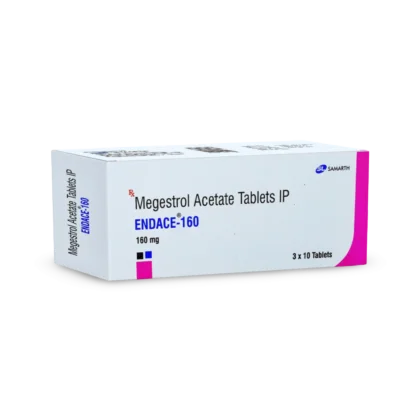
Endace 160 Mg Tablet
Supports nutritional intake and manages condition-related weight loss by altering hormonal balance within the body.
 Advanced Breast Cancer Medications
 Receiving a diagnosis of advanced breast cancer is an overwhelming experience that touches every part of your life and your family’s. This stage of the disease involves cancer that has spread beyond the breast and nearby lymph nodes to other areas of the body. One formulation is listed below, consisting of progestin hormone therapy.
Supports nutritional intake and manages condition-related weight loss by altering hormonal balance within the body.
Advanced breast cancer, often referred to as metastatic breast cancer, occurs when cancer cells have traveled from the original tumor to distant organs or tissues. This may include the bones, lungs, liver, or brain. While it is a significant diagnosis, advancements in medical science continue to change how the disease is approached, shifting the focus toward maintaining quality of life and managing symptoms over time.
Living with this diagnosis requires a steady, collaborative relationship with an oncology team. Symptoms often vary widely based on where the cancer has spread in your body. Common signs may include persistent fatigue, unexplained pain—particularly in the bones—or changes in organ function. Understanding exactly how your body is responding to the condition is a cornerstone of the care you receive.
Treatment for advanced breast cancer is typically systemic, meaning it aims to address cancer cells throughout the entire body rather than in just one location. The strategy depends on the tumor’s molecular characteristics, such as whether it is hormone-receptor-positive or HER2-positive. Hormonal therapies often form the backbone of treatment for receptor-positive cases, as they work to block the hormones that fuel the growth of these cancer cells.
In patients across global markets and similar regulated regions, access to these therapies is strictly managed through clinical oncology pathways. Because individual needs vary, treatment plans are personalized based on the specific biology of your tumor and your prior response to other therapies. Physicians prioritize treatments that aim to slow the progression of the disease while keeping side effects at a manageable level.
The primary class of medication represented here belongs to progestin hormone therapies. These medications act as synthetic forms of the hormone progesterone, which can help inhibit the growth of certain breast cancer cells that are sensitive to hormonal signals. They are frequently used when other hormonal approaches have been exhausted or are not suitable for a specific clinical profile.
These medications are typically administered as oral tablets, allowing for consistent dosing schedules that can be integrated into your daily routine. Because hormonal manipulation can have wide-ranging effects on your body, the choice of a specific hormonal agent is carefully balanced against your overall health, including your cardiovascular and bone health.
Beginning a new hormonal therapy requires a thorough review of your medical history, as these treatments alter the way your body processes hormones. Your care team will often assess your liver function and bone density, as well as your personal history of blood clots or heart-related conditions. This assessment is essential to ensure the chosen medication is appropriate for your current health status.
Hormonal agents generally work by changing the body’s internal chemical balance, which can lead to common changes in your daily well-being. Patients sometimes experience fatigue, shifts in mood, or changes in bone density and skin health. Noting any new or persistent symptoms is a key part of your own observation process, as timely communication allows your team to adjust your care plan.
Advanced breast cancer treatments can interact with other medications, including common supplements or over-the-counter tablets. It is important to disclose every medication you take to your oncologist to avoid potential additive effects or risks to your organ function. Product labeling and verified clinical sources remain the correct references for specific contraindications, interactions, and potential reactions.
This page provides an educational overview of advanced breast cancer and the medication categories listed — not medical advice. Individual products differ in active ingredient, formulation, strength, and directions. The page does not authorize self-directed selection, clinical interpretation, or unsupervised use. Readers should review individual product labeling and speak with a healthcare professional when clinical judgment is needed.