
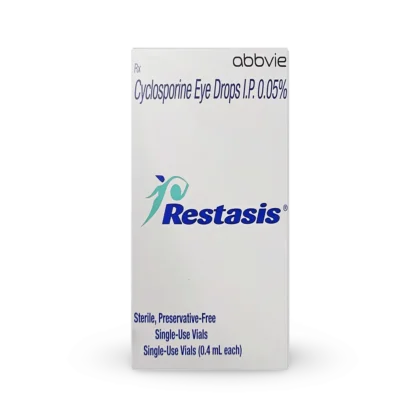
Restasis 0.05% Ophthalmic Emulsion 0.4ml
Increases natural tear production by reducing inflammation on the surface of the eye to soothe dryness.
 Chronic Dry Eye Medications
 Living with chronic dry eye can feel exhausting, as the constant stinging, burning, or gritty sensation often dictates your daily comfort and focus. When your natural tear production is insufficient, your eyes struggle to maintain the moisture needed for a clear, protected surface. One formulation is listed below, utilizing cyclosporine-based ophthalmic emulsion to address the underlying inflammation associated with this condition.
Increases natural tear production by reducing inflammation on the surface of the eye to soothe dryness.
Chronic dry eye, clinically referred to as keratoconjunctivitis sicca, develops when your eyes fail to produce enough tears or when the tears produced evaporate too quickly. This imbalance often results from dysfunction in the lacrimal glands or the meibomian glands, which provide the essential oil layer that prevents tear evaporation. Factors such as age, environment, hormonal changes, and prolonged screen use can exacerbate these symptoms.
Beyond the immediate discomfort, this condition affects the ocular surface and may lead to light sensitivity, blurred vision, or a feeling that your eyes are fatigued. The persistent nature of dryness means that simple hydration may not be enough to restore the protective tear film. Recognizing that your eyes are having trouble maintaining their own health is the first step toward seeking care that targets the root causes rather than just masking the symptoms.
The treatment landscape relies on addressing the inflammation that prevents your eyes from producing high-quality tears. While over-the-counter artificial tears often provide temporary relief for mild cases, therapeutic options focus on modulating the immune response on the ocular surface. These treatments are meant to increase your natural tear production by reducing the sub-clinical inflammation that disrupts tear gland function.
Across international markets, including the United Kingdom, Canada, and the United States, healthcare providers often look at the underlying cause of your dryness before selecting a therapy. Because chronic dry eye involves multiple factors—ranging from gland blockage to inflammatory signaling—treatment often requires a sustained approach. You may find that your provider recommends specific immunological agents when typical lubricants fail to provide relief.
Pharmaceutical approaches to chronic dry eye primarily focus on immunomodulators designed to support the long-term health of your tear-producing cells. Cyclosporine-based emulsions function by suppressing the inflammatory processes that interfere with the normal production and composition of tears. By dampening this persistent inflammation, the medication allows the eye’s natural lubrication system to function more effectively over time.
These ophthalmic emulsions are typically formulated to be applied as drops directly into the eye at regular intervals. Unlike simple water-based drops meant for immediate hydration, these therapeutic formulations aim to alter the ocular environment gradually. It is common for these medicines to require consistent, daily use over several weeks before you notice a meaningful change in how your eyes feel or how well they maintain moisture throughout the day.
Patients across international markets and similar regulated regions search for chronic dry eye medications through online pharmacy directories and health platforms before speaking with a local provider.
Treatment for this condition is intended for those with diagnosed inflammatory components of dry eye. You should discuss your full ocular history with a provider to ensure that your symptoms are not primarily caused by mechanical eyelid issues or allergic reactions. Understanding the baseline state of your ocular surface helps in determining whether long-term immunomodulation is the appropriate clinical path.
Ophthalmic emulsions designed to treat dryness may cause initial sensations of burning or stinging upon application. These reactions are often temporary and tend to dissipate as your eyes adjust to the medication after consistent use. If you experience persistent redness, significant changes in vision, or an increase in ocular pain, it is important to pause the use of the product and seek guidance from a qualified specialist.
While these medications are applied locally to the eye, they may interact with other eye drops or contact lens materials. You should confirm with a provider whether you need to space out the application of different eye treatments to avoid interference. Furthermore, inform your doctor if you have active eye infections or other underlying conditions that might complicate the use of immunomodulators. Product labeling and verified clinical sources remain the correct references for specific contraindications, interactions, and potential reactions.
This page provides an educational overview of chronic dry eye and the medication categories listed — not medical advice. Individual products differ in active ingredient, formulation, strength, and directions. The page does not authorize self-directed selection, clinical interpretation, or unsupervised use. Readers should review individual product labeling and speak with a healthcare professional when clinical judgment is needed.