
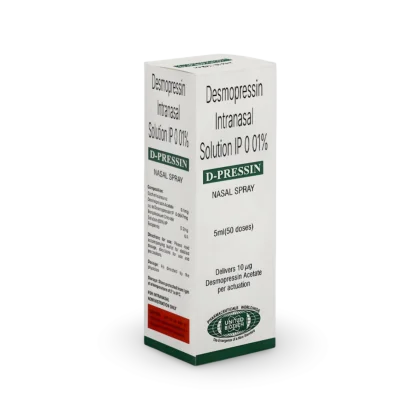
Dpressin Nasal Spray
Mimics a naturally occurring hormone to manage water balance by reducing urine production in the kidneys.
 Excessive Urination Medications
 Excessive urination often creates significant disruption, affecting your sleep quality and daily activities throughout the day. Management typically involves targeting the body’s fluid regulation systems. One formulation is listed below, which belongs to the vasopressin-class of medicines used to manage specific conditions where the kidneys fail to concentrate urine.
Mimics a naturally occurring hormone to manage water balance by reducing urine production in the kidneys.
Frequent, high-volume urination often signals an underlying issue with how your body processes fluids or regulates hormones. It frequently manifests as a constant need to empty your bladder, even when intake has been moderate, and may result in passing unusually large amounts of urine. This sensation of constant thirst and the subsequent output can become overwhelming, often disrupting rest and leading to significant fatigue.
Physiologically, this condition may develop when the hormone responsible for water retention is either lacking or is not being utilized effectively by the kidneys. While many factors influence bladder habits, persistent excessive urination suggests that the kidneys are not conserving water as they normally would. Understanding the specific nature of your symptoms is the first step toward finding relief.
Treatment approaches focus primarily on fluid regulation and addressing the underlying hormonal imbalances that lead to water loss. For conditions where the kidneys cannot concentrate urine effectively, synthetic hormone treatments are common. These medications work by signaling the kidneys to reabsorb water back into the bloodstream, which reduces the volume of fluid sent to the bladder.
Access to these treatments varies by region, with availability often depending on consultation with a specialist who can determine the cause of the urination volume. Patients across the United States, United Kingdom, Australia, Canada, and similar regulated markets typically require a clinical diagnosis before these specific hormone-regulating agents are prescribed.
The primary category of medication used for managing excessive urination consists of vasopressin analogues. These treatments mimic a naturally occurring hormone in the body, which plays a central role in maintaining correct fluid balance. By mimicking this signal, the medicine effectively communicates with the renal system to reduce the total amount of water discarded through urine.
Medications in this category are available in different forms, including nasal sprays, which provide a targeted method for systemic absorption. Each delivery format is designed to ensure the active compound is processed reliably. Choosing the right approach depends on individual clinical needs and how your body responds to hormonal regulation. These tools are meant to facilitate a return to normal fluid cycles rather than offering a permanent fix, so consistency is often required.
Initiating treatment requires a clear understanding of your current health status to ensure the hormone-mimicking effects are appropriate for your system. It is important to confirm that the underlying cause of your symptoms has been identified, as the management of fluid regulation carries specific physiological requirements.
Because these medications influence how your kidneys process, you may need time for your body to adjust to the new rhythm of fluid retention. Awareness of your body’s response to these systemic changes is important, as individual reactions vary based on underlying health factors and general condition.
Other medicines impacting kidney function, blood pressure, or electrolyte levels may interact with synthetic vasopressin treatments. Factors such as fluid intake management are often balanced alongside the medication to prevent complications related to how fluid is retained in the body. Product labeling and verified clinical sources remain the correct references for specific contraindications, interactions, and potential reactions.
This page provides an educational overview of excessive urination and the medication categories listed — not medical advice. Individual products differ in active ingredient, formulation, strength, and directions. The page does not authorize self-directed selection, clinical interpretation, or unsupervised use. Readers should review individual product labeling and speak with a healthcare professional when clinical judgment is needed.