
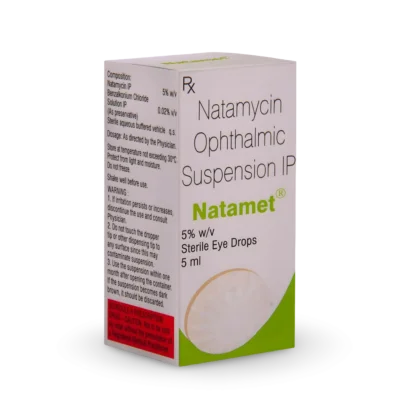
Natamet 5% 3 ml
Targets fungal growths in ocular tissue by binding to sterols and disrupting fungal cell wall integrity.
 Fungal Eye Infections Medications
 Dealing with a vision-affecting condition like a fungal eye infection often brings significant worry and uncertainty. These infections require prompt attention to protect delicate ocular structures. The formulation listed below belongs to the antifungal-class, a specialized category of medicines designed to stop the growth of infectious fungal cells.
Targets fungal growths in ocular tissue by binding to sterols and disrupting fungal cell wall integrity.
Fungal eye infections, or fungal keratitis, occur when fungi invade the tissues of the eye, typically following an injury from plant matter or prolonged contact lens wear. Unlike common bacterial issues, these infections progress differently and often require specific, targeted care to prevent long-term damage to the cornea. The primary sensation involves persistent irritation, redness, and a noticeable sensitivity to light.
Patients often experience a sensation of a foreign object trapped inside the eye along with blurred vision that does not improve with standard approaches. Because the infection affects the ocular surface, it can interfere with how your eye heals and maintains its integrity. Identifying and addressing these symptoms early remains the best way to support your long-term eye health and maintain visual clarity.
Treatment relies on consistent, targeted antifungal agents that effectively penetrate the ocular tissue. Healthcare providers typically select these medicines based on the specific type of fungus involved, often requiring a biopsy or detailed testing to confirm the diagnosis. Because these infections occur in a highly sensitive area, the treatment landscape focuses on localized options that can be applied directly to the site to reduce the pathogen load.
Across international markets, including sites like the United States, United Kingdom, Australia, and Canada, these medications are strictly regulated. They are almost exclusively dispensed under direct medical supervision to ensure the concentration used is appropriate for your specific ocular needs. Because the eye is a complex organ, your provider will weigh the necessity of continuous coverage against the risk of irritation from the medication itself.
Antifungal formulations for the eye are generally categorized by their chemical method of disrupting fungal repair. These agents work by preventing the fungi from developing necessary cell wall components, which effectively halts the infection’s spread. Because they target fungal structures that differ significantly from human cells, they aim for a focused effect on the infection while minimizing impact on surrounding ocular tissue.
These medications are typically formulated as liquids for direct application to the eye. You may notice substantial variation in how frequently these are applied compared to standard eye drops, as maintaining a constant concentration is critical for preventing the fungi from rebounding. Coordination with your provider is essential when navigating these application schedules to ensure the medication provides the support your eyes need during recovery.
Treatment for an ocular infection demands strict adherence to the guidance provided by your eye specialist. Always confirm that the medication strength and the frequency of application align exactly with your current diagnosis. Never initiate or modify a routine for an eye infection without direct confirmation from a trained medical professional, as the eye is exceptionally vulnerable to improper handling or dosing.
Topical antifungals may cause temporary side effects, such as a mild burning sensation, localized itching, or increased tearing immediately after application. While these occurrences are often associated with the medication’s penetration into the corneal tissue, they should be monitored closely. If you develop signs of an increased allergic reaction, such as swelling around the lids or persistent pain, contact your medical team to re-evaluate the course of your care.
Your use of other ocular products, including contact lenses or moisturizing drops, must be managed carefully while on antifungal treatment. Certain ingredients in standard eye care products can potentially interfere with the efficacy of the antifungal agent. Product labeling and verified clinical sources remain the correct references for specific contraindications, interactions, and potential reactions.
This page provides an educational overview of fungal eye infections and the medication categories listed — not medical advice. Individual products differ in active ingredient, formulation, strength, and directions. The page does not authorize self-directed selection, clinical interpretation, or unsupervised use. Readers should review individual product labeling and speak with a healthcare professional when clinical judgment is needed.