
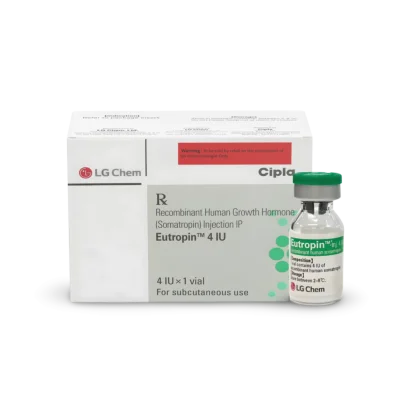
Eutropin 4 IU Injection
Supplements natural hormone levels to support normal growth patterns and metabolic function in children and adults.
 Growth Hormone Deficiency Medications
 Living with growth hormone deficiency can feel overwhelming, especially when navigating the complexities of hormone replacement therapy. This condition occurs when the pituitary gland does not produce enough growth hormone, which is essential for normal physical development. One formulation is listed below, consisting of somatropin—a synthetic version of the human growth hormone.
Supplements natural hormone levels to support normal growth patterns and metabolic function in children and adults.
Growth hormone deficiency arises when the pituitary gland, a small organ at the base of the brain, fails to release an adequate amount of growth hormone. This substance is vital for stimulating growth and regulating how the body uses energy. Without enough of this hormone, children may experience noticeably slow growth, while adults might struggle with changes in body composition and bone health.
The experience of this condition often involves significant fatigue and emotional weight, as the body struggles to maintain its natural metabolic processes. Whether diagnosed in childhood or developed later due to injury or pituitary conditions, the impact goes beyond physical height. It affects how you feel day-to-day, influencing muscle strength, energy levels, and general well-being.
Treatment focuses on replacing the hormone that the body is missing through exogenous administration. This approach is known as growth hormone replacement therapy. Because the hormone itself is a protein that would be destroyed by the digestive system, it must be administered by injection to reach the bloodstream and perform its function effectively.
Patients across global markets often work closely with endocrinologists to determine the appropriate course for their specific hormonal profile. These medications are strictly regulated and require professional supervision because they work by mimicking naturally occurring substances that play a central role in body development and maintenance. The treatment landscape is unified by the use of synthetic human growth hormone, known pharmacologically as somatropin.
Medications for this condition are classified by their active ingredient, somatropin. While the underlying hormone is consistent across various products, the delivery systems and concentration strengths vary to accommodate different administration needs and treatment protocols.
These formulations come in an injectable form, usually provided as a professional-grade solution or a powder that requires reconstitution. The evolution of device technology has significantly changed how these medications are prepared and administered, allowing for greater precision and ease during the injection process. Understanding the specific concentration of your prescribed product is a necessary step in following a treatment plan.
Therapy should only commence after a thorough clinical assessment confirms a genuine deficiency. Your healthcare professional will conduct blood tests to measure your growth hormone levels before recommending any injectable replacement. It is important to disclose any history of tumors or serious chronic health conditions, as these factors may influence whether hormonal supplementation is an appropriate path.
Because these medications influence systemic growth and protein synthesis, some individuals may notice changes in fluid retention or joint discomfort during the initial phases of therapy. Reactions depend largely on the dose and the body’s individual response to the reintroduced hormone. Monitoring your response through regular check-ups is a standard part of minimizing these effects and ensuring the treatment remains targeted to your specific needs.
Growth hormone can interact with other treatments, including corticosteroids and insulin, because of its role in blood sugar and metabolic pathways. Other underlying health factors, such as scoliosis or glucose intolerance, must be monitored because added hormone therapy can exacerbate these conditions in certain cases. Product labeling and verified clinical sources remain the correct references for specific contraindications, interactions, and potential reactions.
This page provides an educational overview of growth hormone deficiency and the associated medication category—not medical advice. Individual products differ in active ingredient, formulation, density, and professional directions. This page does not authorize self-directed selection, clinical interpretation, or unsupervised use. You should review specific product labeling and speak with a qualified endocrinologist or healthcare professional when clinical judgment is needed for your unique health situation.