
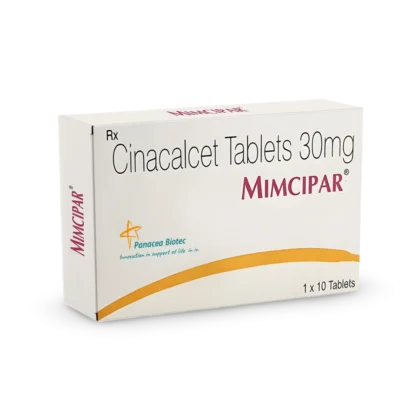
Mimcipar 30 Mg Tablet
Mimics calcium in your body to lower parathyroid hormone production, helping to balance mineral levels effectively.
 High Calcium Levels Medications
 Managing persistently high calcium levels, or hypercalcemia, often requires targeted medical intervention to restore balance within your body’s systems. This condition can feel overwhelming, but specific therapeutic pathways assist in regulating mineral levels. One formulation is listed below, representing the calcimimetic class of medicines used to address elevated calcium resulting from underlying parathyroid activity.
Mimics calcium in your body to lower parathyroid hormone production, helping to balance mineral levels effectively.
High calcium levels, clinically referred to as hypercalcemia, occur when the concentration of calcium in your blood rises above the normal healthy range. Calcium is essential for strong bones and proper muscle and nerve function; however, an excess circulating in the bloodstream can disrupt these processes significantly. Over time, this imbalance might lead to fatigue, bone pain, or complications involving your kidneys and digestive system.
Living with this condition often involves tracking symptoms that can be subtle, such as increased thirst, frequent urination, or unexplained muscle weakness. Because calcium regulates everything from how your heart beats to how your cells communicate, keeping these levels within a specific range is important for your overall well-being. Understanding why your levels are elevated—whether due to parathyroid gland activity or other systemic factors—is an important step in your health journey.
Treatment approaches for high calcium levels focus on identifying and addressing the root cause while directly lowering blood calcium concentrations. Doctors typically categorize these treatments based on the underlying driver of the imbalance, such as hyperparathyroidism or other metabolic conditions. By adjusting how your body processes or excretes calcium, these medications help return your internal chemistry to a more stable state.
In international markets, medical providers often use calcimimetics to modulate the sensitivity of the parathyroid gland to calcium, which subsequently lowers the release of parathyroid hormone. While some patients find relief through lifestyle adjustments and hydration, others require specific pharmaceutical intervention to manage the metabolic signals that keep calcium levels high. These treatments are managed under clinical supervision, as they specifically target the endocrine pathways regulating your mineral levels.
Medications for high calcium levels are generally categorized by how they interact with bone turnover or hormonal signaling. Calcimimetics represent a primary class that acts directly on your parathyroid cells. By tricking these cells into sensing more calcium than is actually present, the medication effectively dials back the production of parathyroid hormone, resulting in a direct shift in serum calcium concentrations.
Other approaches may involve treatments that reduce the release of calcium from bone tissue, which is particularly relevant when bone density or structure is affected. Your provider evaluates your specific blood markers to determine which mechanism is most suitable for your needs. Relying on these professional evaluations helps ensure that any chosen medication aligns with your unique health history and current blood chemistry.
Starting any medication that alters your body’s mineral regulation requires a clear understanding of your current kidney and liver health. Because your body relys on these organs to process and clear substances, your medical provider will likely conduct blood tests to establish a baseline. This monitoring is central to ensuring your adjustment to the medication remains smooth and responsive to your body’s specific needs.
Every individual reacts differently to treatments that alter hormone signaling or bone metabolism. You might experience temporary shifts in your energy levels or digestive comfort as your body adjusts to the new chemical balance. Monitoring for any persistent or unusual symptoms ensures that your treatment path can be adjusted by your provider if your response does not align with expected therapeutic goals.
Medications used for high calcium levels can interact with other minerals or supplements you may be taking, such as vitamin D or additional calcium supports. It is important to disclose all current supplements and over-the-counter additions to your doctor, as these can conflict with the intended effect of calcimimetic agents. Product labeling and verified clinical sources remain the correct references for specific contraindications, interactions, and potential reactions.
This page provides an educational overview of high calcium levels and the medication categories listed — not medical advice. Individual products differ in active ingredient, formulation, strength, and directions. This page does not authorize self-directed selection, clinical interpretation, or unsupervised use. Readers should review individual product labeling and speak with a healthcare professional when clinical judgment is needed to manage metabolic conditions or elevated serum calcium.