
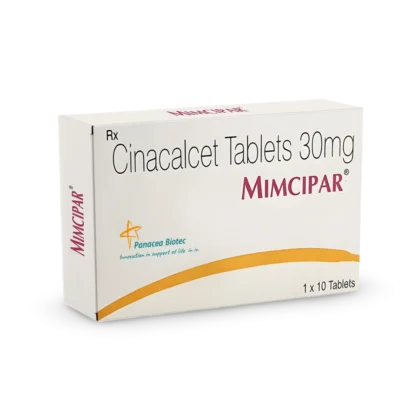
Mimcipar 30 Mg Tablet
Mimics calcium in your body to lower parathyroid hormone production, helping to balance mineral levels effectively.
 High Parathyroid Hormone Medications
 Living with high parathyroid hormone levels, or hyperparathyroidism, often means navigating persistent concerns about your body’s calcium and phosphorus regulation. This condition can feel overwhelming when it stems from underlying kidney challenges or glandular activity. One formulation is listed below, utilizing the calcimimetic class to assist in managing these chemical imbalances.
Mimics calcium in your body to lower parathyroid hormone production, helping to balance mineral levels effectively.
Hyperparathyroidism occurs when your parathyroid glands release too much parathyroid hormone into your bloodstream. These four tiny glands, located behind your thyroid in the neck, play a vital role in maintaining your body’s calcium levels. When the hormone levels remain consistently elevated, your body may pull too much calcium from your bones, which can lead to structural weakness and other health complications over time.
Secondary hyperparathyroidism is a common variation where the glands overwork to compensate for low blood calcium or high phosphate levels, frequently seen in individuals with chronic kidney disease. Dealing with these changes can impact your daily comfort and long-term health. Understanding that this condition is a systemic communication error between your organs and your glands can help you feel more empowered when coordinating your care with a specialist.
Medical management for high parathyroid hormone levels typically focuses on normalizing calcium and phosphate concentrations while reducing the stimulation of the parathyroid glands. Physicians often categorize these approaches based on the root cause, whether it is primary gland overactivity or a secondary response to impaired organ function. Treatments are designed to lower hormone levels effectively without masking the underlying trigger.
The primary pharmacological approach utilizes calcimimetics. This drug class functions by mimicking the action of calcium on the parathyroid gland’s receptor. By convincing the gland that calcium levels are adequate, the medication effectively slows the release of excess hormone. In addition to these medicines, clinical strategies often include phosphate binders and vitamin D analogues to assist in maintaining a stable mineral balance across your system.
Calcimimetics represent a specialized treatment path for those whose parathyroid hormone levels remain high despite other supportive care. These medications are unique because they do not simply add calcium to your blood; instead, they alter the sensitivity of the parathyroid cells themselves. This provides a focused way to address the hormone excess at its source within the endocrine system.
Because the severity of mineral imbalances varies significantly between individuals, medication efficacy relies heavily on regular monitoring of blood chemistry. The oral delivery format allows for consistent intake as part of a broader management plan. These treatments are intended to be integrated into a strategy overseen by a nephrologist or endocrinologist who can adjust the approach based on your ongoing laboratory results.
Managing parathyroid hormone levels requires a baseline understanding of your current calcium and phosphate status. Prior to starting any medication, ensure your blood chemistry has been thoroughly evaluated. Because these medications act directly on the feedback loops of your glands, starting them necessitates a stable environment where your levels can be tracked closely by a clinical professional.
The primary goal of calcimimetics is to lower hormone levels, but this process impacts your entire system’s mineral regulation. Some individuals may experience shifts in calcium levels that lead to physical discomfort or changes in how they feel day-to-day. If you notice persistent nausea or changes in your energy levels, communicate these observations to your healthcare provider, as they may indicate a need to adjust your regimen or current calcium support.
Your liver and kidneys play essential roles in how your body processes and eliminates these medications. Inform your provider if you have a history of impaired organ function, as this may necessitate specialized monitoring. Additionally, inform your care team about all other supplements or prescriptions you take, specifically those that impact bone health or mineral absorption, to prevent unintended interactions. Product labeling and verified clinical sources remain the correct references for specific contraindications, interactions, and potential reactions.
This page provides an educational overview of high parathyroid hormone levels and the medication categories listed — not medical advice. Individual products differ in active ingredient, formulation, strength, and directions. The page does not authorize self-directed selection, clinical interpretation, or unsupervised use. Readers should review individual product labeling and speak with a healthcare professional when clinical judgment is needed.