
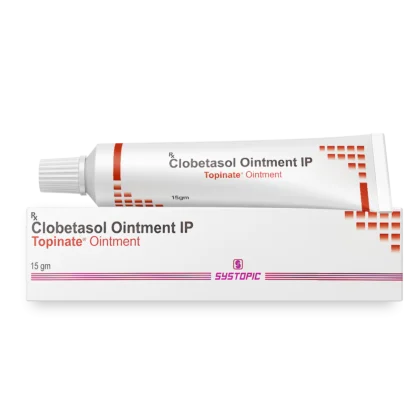
Topinate 0.05% Cream 30 gm
Reduces redness, swelling, and itching by suppressing the body's overactive immune responses in the skin.
 Inflammatory Skin Conditions Medications
 Living with chronic skin irritation often feels isolating, especially when visible symptoms persist despite your best efforts to find relief. These conditions often manifest as persistent redness, swelling, and intense itching that affect your daily comfort and confidence. One formulation is listed below, representing the use of topical steroids like clobetasol to soothe specific skin inflammation.
Reduces redness, swelling, and itching by suppressing the body's overactive immune responses in the skin.
Inflammatory skin conditions represent a broad category of dermatological issues where the skin barrier becomes irritated or compromised. These reactions often stem from an overactive immune response to internal triggers or external environmental factors, leading to cellular damage that manifests on the surface. While the exact cause varies by condition, the underlying feature remains a persistent cycle of inflammation that requires careful observation.
Symptoms frequently include patches of dry, scaly, or inflamed skin that may swell or change color in response to touch, stress, or allergens. Because these reactions occur on your body’s largest organ, they impact more than just physical appearance; they often create ongoing discomfort that can interfere with sleep and focus. Understanding your specific pattern of flare-ups is the first step toward managing the irritation effectively.
Management of these skin concerns primarily revolves around topical corticosteroids. These medications mimic naturally occurring hormones in the body to slow down the inflammatory cascade at the site of application. By reducing the local immune response within the skin tissues, these treatments provide significant relief from the physical urge to itch and allow the skin barrier time to recover naturally.
Across international markets, including sites throughout the United States, United Kingdom, Australia, and Canada, these treatments are typically used for acute flare-ups rather than long-term, daily application. Healthcare providers often categorize these medicines by their potency to select the appropriate level of strength for the specific area of the body involved. The treatment goal remains the stabilization of the skin to prevent further breakdown.
Topical corticosteroids, such as clobetasol, act as the standard approach for calming localized immune overactivity. When applied to the skin, these medicines penetrate the outer layers to limit the production of substances that cause swelling and redness. This targeted delivery allows the medication to work exactly where the irritation is most present, minimizing the reliance on systemic drugs.
Choosing the right base—such as creams, ointments, or gels—depends on the nature of the affected area. Ointments are generally more intensive and provide a protective barrier for dry, thickened skin, while creams absorb more readily and are often preferred for areas that require comfort when layered under clothing. These differentiators exist to increase your consistency and ease of use when following a guidance plan from your provider.
Addressing inflammation requires an accurate diagnosis, as different skin disorders respond to vastly different treatment classes. Using a high-potency steroid on the wrong condition may worsen the underlying issue or mask a developing infection. Always ensure your healthcare provider has confirmed the nature of your skin reaction before applying any medication.
Topical steroids are effective at stopping the cycle of itching and scratching, but they can thin the skin if used for prolonged periods. Monitor the application site carefully for signs of excessive sensitivity, darkening, or unintended changes in texture. If your skin appears to react negatively to a specific base or active ingredient, pause use and seek professional guidance.
Your overall health and the presence of other medical conditions—such as diabetes or compromised circulatory systems—can influence how your skin responds to medicinal treatments. Other topical products, including standard moisturizers or anti-aging ingredients, may also interact with medicinal creams. Product labeling and verified clinical sources remain the correct references for specific contraindications, interactions, and potential reactions.
This page provides an educational overview of inflammatory skin conditions and the medication categories listed — not medical advice. Individual products differ in active ingredient, formulation, strength, and directions. The page does not authorize self-directed selection, clinical interpretation, or unsupervised use. Readers should review individual product labeling and speak with a healthcare professional when clinical judgment is needed.