
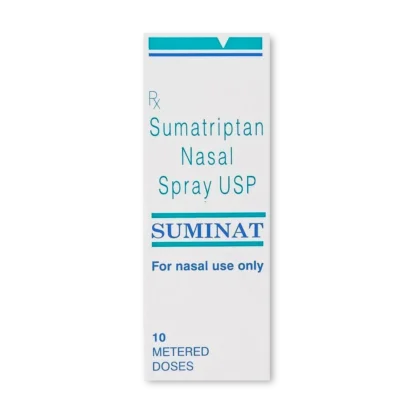
Suminat Nasal Spray 20gm/Dose
Constricts dilated blood vessels in the brain to relieve the throbbing pain associated with migraine attacks.
 Migraine Attacks Medications
 Experiencing the throbbing pain and sensory sensitivity of a migraine attack can feel isolating and overwhelming. When standard methods fail to provide relief, you may look into clinical options designed for symptom management. One formulation is listed below, which belongs to the triptan class of medicines used to address acute migraine symptoms.
Constricts dilated blood vessels in the brain to relieve the throbbing pain associated with migraine attacks.
A migraine attack represents more than just a headache. It is a complex neurological event often characterized by intense, pulsing pain typically focused on one side of the head. Beyond the physical discomfort, you might experience sensitivity to light, sound, and smell, alongside nausea or vomiting.
Many people also encounter an aura before the head pain begins. This may involve visual disturbances like flashing lights, zigzag lines, or temporary blind spots. Understanding these triggers and symptom patterns is the first step toward effective management. Because these attacks can significantly limit your ability to work or interact with others, finding a approach that helps you regain control remains a primary goal.
Treating migraine attacks often involves a combination of lifestyle adjustments and medicine chosen based on the frequency and severity of your symptoms. Healthcare providers categorize treatments into two approaches: acute care, which stops an attack already in progress, and preventive care, which reduces the likelihood of future episodes.
Triptans, the class of medicine listed here, are specifically formulated for acute relief. They work by stimulating serotonin receptors in the brain to constrict blood vessels and block pain pathways associated with migraine. In many global markets, these formulations are accessed under the guidance of a physician, as their use is tailored to the specific nature of your neurological symptoms.
Navigating options for migraine relief often focuses on how quickly a medicine enters your system. For those who experience nausea as a symptom of their migraine, oral pills may not be the most effective choice. Nasal sprays and other non-oral formats are designed to offer an alternative delivery method that bypasses the digestive system.
These formulations act directly at the site of vascular inflammation. By narrowing widened blood vessels in the brain, they aim to short-circuit the pain signal before it intensifies. Discussing the form of medicine—whether a spray, tablet, or injectable—with a provider ensures you choose an option that minimizes potential complications while maximizing symptom relief during an attack.
Triptans are designed for the treatment of active migraine attacks rather than daily headache prevention. You should verify that your symptoms align with a clinical diagnosis of migraine, as these medicines do not address other forms of head pain. Your provider will evaluate your medical history to ensure this class of medicine is appropriate for your specific needs.
Because these medications influence blood vessels, some people experience sensations of tightness, heaviness, or flushing after use. These sensations usually pass quickly, but you must monitor how your body responds to the initial administration. If you experience unexpected pressure in the throat or chest, contact a healthcare professional to rule out adverse activity.
Triptans should be used with caution if you have a history of cardiovascular disease, as the vascular constriction they provide affects the bodywide circulation. Your provider will also need to consider other medicines you take, particularly antidepressants or other migraine treatments that affect serotonin levels. Product labeling and verified clinical sources remain the correct references for specific contraindications, interactions, and potential reactions.
This page provides an educational overview of Migraine Attacks and the medication categories listed — not medical advice. Individual products differ in active ingredient, formulation, strength, and directions. The page does not authorize self-directed selection, clinical interpretation, or unsupervised use. Readers should review individual product labeling and speak with a healthcare professional when clinical judgment is needed.