
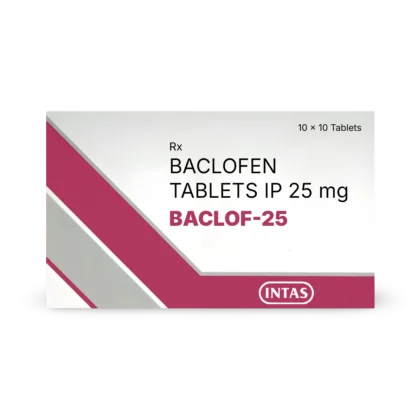
Baclof 25 Mg
Supports reduced muscle stiffness by acting on nerves in the spinal cord to inhibit signal transmission.
 Muscle Spasms Medications
 Living with persistent muscle tension brings daily challenges that disrupt everything from your sleep to your ability to move comfortably. When these involuntary contractions become chronic, finding relief often requires looking beyond home remedies. The medication listed below includes skeletal muscle relaxants designed to address these physical signals by targeting the underlying neurological pathways.
Supports reduced muscle stiffness by acting on nerves in the spinal cord to inhibit signal transmission.
Muscle spasms occur when a muscle involuntarily contracts and fails to relax. This experience manifests as a sudden, intense tightness or a visible twitching beneath the skin, often accompanied by sharp, localized pain. While these episodes can stem from simple overuse or dehydration, recurring spasms often relate to underlying neurological conditions or chronic injury recovery.
The sensation of a spasm often feels like a locked joint or a persistent knot that prevents full range of motion. Beyond the immediate physical impact, the unpredictability of these episodes creates a layer of stress that affects your daily productivity and mental well-being. Recognizing the difference between occasional strain and persistent, chronic spasms is the internal first step toward discussing targeted relief with a medical professional.
Clinical approaches to muscle spasms rely on skeletal muscle relaxants. These medicines work by depressing central nervous system activity, which alters how your body perceives pain and limits the excitability of the nerves responsible for triggering muscle contractions. This approach is intended to dampen the signal that causes the muscle to remain in a locked or tightened state.
Treatment paths vary widely across international markets like the United States, United Kingdom, Australia, and Canada, typically depending on the frequency and severity of the episodes. While physical therapy remains a cornerstone for long-term recovery of muscle integrity, these medications act as a supporting tool to lower the barrier for movement. Providers often suggest them for short-term use to break the cycle of pain and allow damaged tissue to rest without constant, repetitive activation.
Skeletal muscle relaxants are generally categorized by their primary mechanism of action within the central nervous system. These medications function by interacting with the pathways that control your motor neurons. By reducing the frequency or intensity of the nerve impulses sent to the affected muscles, these formulations help the muscle fibers return to a resting length.
The choice of medication often hinges on the desired onset of action and the duration of relief. Some formulations provide rapid, temporary suppression of twitching, while others facilitate sustained relaxation, usually taken in alignment with rest periods. Because these medicines alter how your nervous system communicates with your musculoskeletal framework, the focus remains on using the lowest dose that provides meaningful functional improvement rather than total system suppression.
Patients across global and similar regulated markets search for muscle spasms medications through online pharmacy directories and health platforms before speaking with a local provider. Consider these points when researching your options online:
Starting any new medication for spasms requires an assessment of your overall neurological and cardiovascular health. These medicines can cause drowsiness or altered coordination, which impacts the ability to drive or operate heavy machinery. Understanding how your body responds to the initial dose is critical before increasing frequency or continuing use over an extended period.
Because skeletal muscle relaxants affect the central nervous system, many patients report a period of adjustment. Potential reactions often involve dizziness, dry mouth, or changes in alertness as the body processes the medication. These effects are generally more pronounced during the first few days of treatment as your system calibrates to the medicine’s activity.
Muscle relaxants interact with various substances, most notably alcohol or other medications that induce sedation, such as sleep aids or certain pain relievers. Combining these can lead to excessive drowsiness or depressed respiratory function. Individuals with a history of liver or kidney impairment should be particularly careful, as these organs are vital for filtering the medication from the system. Product labeling and verified clinical sources remain the correct references for specific contraindications, interactions, and potential reactions.
This page provides an educational overview of muscle spasms and the medication categories listed — not medical advice. Individual products differ in active ingredient, formulation, strength, and directions. The page does not authorize self-directed selection, clinical interpretation, or unsupervised use. Readers should review individual product labeling and speak with a healthcare professional when clinical judgment is needed.