
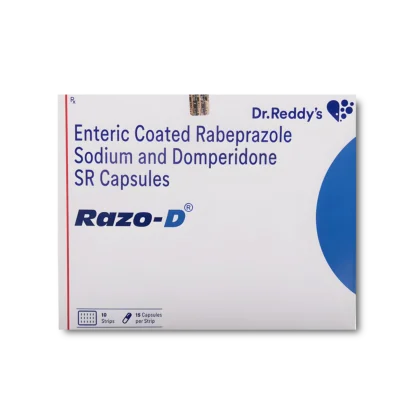
Razo D
Reduces stomach acid production while accelerating digestive movement to ease persistent heartburn and nausea symptoms.
 Nausea Medications
 Living with persistent nausea can leave you feeling drained, making everyday tasks feel overwhelming and difficult to manage. Understanding what triggers this physical discomfort is the first step toward finding relief. Two formulations are listed below, covering common classes including antiemetics like domperidone (Vomistop) and gastrointestinal agents combining proton pump inhibitors with prokinetics (Razo D).
Reduces stomach acid production while accelerating digestive movement to ease persistent heartburn and nausea symptoms.

Blocks dopamine receptors to speed up digestive movement and reduce the urge to finish meals in discomfort.
Nausea is a complex physical sensation characterized by an uneasy stomach and an accompanying urge to vomit. It functions as a protective signal from your brain, potentially warning you of an underlying illness, toxin, or systemic imbalance. While often transient, persistent feelings of being unwell in the stomach can significantly interfere with your daily life and nutritional intake.
Many factors may contribute to this sensation, ranging from motion sickness and viral infections to gastrointestinal disorders or medication side effects. Because it involves neurological, chemical, and mechanical signals within the body, the experience of feeling “sick” is deeply personal. Identifying whether your discomfort relates to digestive motility, inner-ear signals, or other triggers is essential for managing your symptoms effectively.
Managing nausea often involves selecting medications that target specific chemical pathways in the brain and stomach. Antiemetics, a primary class of treatment, work by blocking receptors that signal the vomiting center in the brain. Other approaches utilize gastrointestinal agents that improve how food moves through your system, which can reduce the pressure and reflux often associated with stomach distress.
Access to these treatments varies by region across international markets. In many settings, practitioners distinguish between medications used for sudden, acute episodes and those intended for persistent conditions related to digestive health. Because nausea is a symptom of diverse causes, these agents address the physical manifestation rather than the root cause itself.
The medications listed for nausea generally fall into categories designed to calm the digestive tract or intercept the chemical signals that trigger the urge to vomit. Understanding the intent behind these categories can help you prepare for a meaningful discussion with a healthcare provider about what might suit your specific situation.
This class includes agents such as domperidone that work by accelerating gastric emptying. By encouraging the stomach to empty its contents more effectively, these medications often reduce the feeling of fullness and the subsequent urge to vomit. They are frequently used when physical discomfort is linked to delayed digestive transit.
Some formulations, such as those combining a proton pump inhibitor with a prokinetic, take a dual approach. The proton pump inhibitor reduces stomach acid production, while the prokinetic component aids movement through the digestive system. This combination is typically intended for individuals whose nausea is accompanied by acid reflux or chronic dyspepsia.
It is important to determine the underlying cause of your symptoms before beginning any medication. If your distress is new, persistent, or accompanied by severe pain, consulting a professional is the standard approach to ensure you receive an accurate diagnosis.
Different classes of medication carry unique profiles regarding how your body processes them. Some individuals may experience changes in heart rhythm or digestive sensitivity when using antiemetics. Monitoring how your body responds to a new treatment is a key part of ensuring it remains suitable for your health needs.
Medications used for stomach distress can interact with other drugs, including those for heart conditions or neurological health. If you are taking other daily medications, your current regimen should be reviewed to prevent unintended consequences. Product labeling and verified clinical sources remain the correct references for specific contraindications, interactions, and potential reactions.
This page provides an educational overview of nausea and the medication categories listed — not medical advice. Individual products differ in active ingredient, formulation, strength, and directions. This page does not authorize self-directed selection, clinical interpretation, or unsupervised use. Readers should review individual product labeling and speak with a healthcare professional when clinical judgment is needed to address chronic or concerning symptoms.