
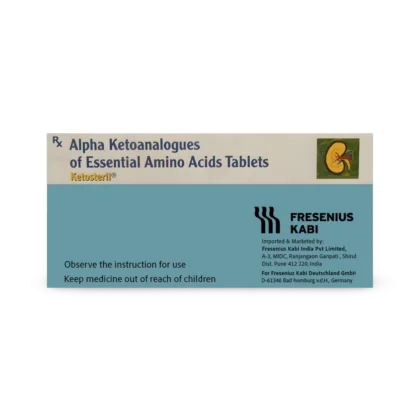
Ketosteril Tablet
Provides essential nitrogen-free amino acid precursors to support protein metabolism and reduce buildup of waste products.
 Nutritional Support in Chronic Kidney Disease Medications
 Managing chronic kidney disease involves steady attention to your body’s metabolic demands as your kidneys lose the ability to filter waste effectively. Nutritional support helps address this imbalance by providing essential amino acid precursors that assist in maintaining protein metabolism. One formulation is listed below, specifically focusing on keto-analogues to support nutritional balance.
Provides essential nitrogen-free amino acid precursors to support protein metabolism and reduce buildup of waste products.
Living with chronic kidney disease often requires a careful approach to diet and supplemental support. As kidney function declines, the body struggles to process certain waste products resulting from protein intake, which can lead to metabolic complications. Managing your health in this context often involves reducing the strain on your kidneys while ensuring your body receives the nutrition necessary to prevent muscle wasting and maintain energy levels.
When your kidneys can no longer efficiently remove the byproducts of protein consumption, healthcare providers may adjust your dietary protein intake. This shift aims to minimize the accumulation of uremic toxins—compounds that would normally be filtered out—without depriving your body of the essential building blocks needed to maintain organ function and repair tissue. Nutritional support here serves as a bridge, offering an alternative way to provide the body with essential amino acids.
Nutritional management typically centers on keto-analogues, a class of supplements designed to provide essential amino acids without the nitrogen load associated with dietary proteins. By taking these supplements alongside a protein-restricted diet, individuals aim to reduce the metabolic burden on the kidneys while keeping protein synthesis active. This approach is intended to slow the progression of uremic symptoms and support overall nitrogen balance.
Availability of these supplements varies across global markets, including regions such as the European Union, India, and various Asian territories. Healthcare providers in these locations may incorporate keto-analogues into a broader treatment plan that includes strict monitoring of electrolytes, phosphorus, and fluid intake. These interventions are specific to the stage of kidney function and are adjusted based on regular laboratory blood work and physical assessments.
Nutritional support formulations are generally categorized by their ability to provide keto-analogues of essential amino acids. These compounds differ from standard protein supplements because they do not contain nitrogen, meaning they require the body to use circulating urea to synthesize new proteins. This unique mechanism effectively converts waste nitrogen into useful amino acids, a process that relieves pressure on the renal system.
The primary role of these formulations is to act as a metabolic aid during periods of restricted protein intake. Unlike general dietary supplements designed for weight gain or athletic performance, these are specifically formulated to align with the physiological constraints of compromised kidney function. Patients often track their intake alongside dietary shifts prescribed by their nephrologist or clinical nutritionist to ensure the support strategy remains effective for their current renal status.
Beginning a regimen involving nutritional support requires a thorough review of your current laboratory markers, especially your blood urea nitrogen and phosphorus levels. These supplements are intended for use only as part of a medically supervised program that includes significant dietary protein restriction. Starting them without professional guidance may lead to metabolic imbalances or an inability to achieve intended nutritional goals.
Tolerance to nutritional supplements can vary based on your overall sensitivity and the presence of other medical complications. While these formulations do not typically cause widespread issues, any unusual physical response—such as digestive discomfort or changes in energy levels—should be reported immediately. Monitoring your health closely when starting a new metabolic support plan ensures that your body is responding as expected to the added compounds.
Nutritional supplements for kidney health may interact with other medications, particularly those used to manage blood pressure or mineral balance. It is important to disclose all concurrent treatments to your clinical team, as the effectiveness of keto-analogues relies on a stable metabolic environment. Product labeling and verified clinical sources remain the correct references for specific contraindications, interactions, and potential reactions.
This page provides an educational overview of nutritional support in chronic kidney disease and the categories listed — not medical advice. Individual products differ in active ingredient, formulation, strength, and directions. The page does not authorize self-directed selection, clinical interpretation, or unsupervised use. Readers should review individual product labeling and speak with a healthcare professional when clinical judgment is needed.