
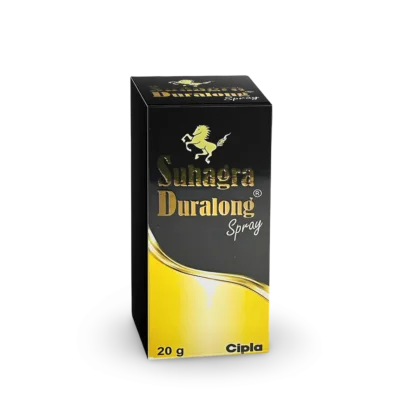
Suhagra Duralong Spray 20 mg
Combines active compounds to support erectile function while providing local numbing effects to assist with performance timing.
 Premature Ejaculation Medications
 Managing premature ejaculation often feels like a lonely experience, yet it remains one of the most common sexual health concerns men encounter. This condition, characterized by ejaculation occurring sooner than you or your partner might prefer, can impact your confidence and relationship satisfaction. Understanding how various treatment categories work offers a clear path toward reclaiming control over your sexual encounters.
Combines active compounds to support erectile function while providing local numbing effects to assist with performance timing.
Supports sexual performance by enhancing blood flow and providing surface sensitivity control for improved timing and stamina.

Desensitizes targeted skin areas by temporarily blocking pain signals and nerve stimulation at the surface.
Premature ejaculation happens when sexual stimulation leads to ejaculation before there is a mutual desire to complete intercourse. It often brings feelings of frustration or concern, impacting the intimacy you share with a partner. Whether it occurs occasionally or more frequently, acknowledge that this experience is a recognized biological and psychological outcome rather than a personal failing.
Physical tension, stress, and specific sensitivities in the penile area often contribute to why this happens. While many people notice it during early sexual activity, it can also manifest at different stages of life due to changes in stress levels, relationship dynamics, or underlying health factors. Recognizing these patterns marks the first step toward effective management.
Treatment for premature ejaculation focuses on balancing excitement with physiological regulation. Most approaches involve desensitization, which aims to reduce the sensitivity of the skin in the genital area to help prolong the duration of intercourse. Topical sprays and creams represent the primary category of non-invasive support for this purpose.
In global markets, including international hubs, these topical agents are widely sought for their localized application. By applying a controlled amount of a desensitizing agent to the skin, you can temporarily modulate sensory input. These products are intended for application directly to the area, requiring only a small amount to achieve the intended effect while maintaining comfort for both partners.
The primary class of medications available for this condition consists of topical anesthetics. These products generally incorporate ingredients like lidocaine or prilocaine, which belong to a class of compounds known as local anesthetics.
These agents work by forming a temporary, mild numbing barrier when applied to the skin. This effect reduces the intensity of tactile stimulation during physical intimacy, effectively providing a delay mechanism that allows for more control. Because they are applied externally, they provide a focused approach that does not necessarily impact your entire system.
You will find these agents available in different formats, such as sprays or creams. Sprays allow for a quick, even distribution over the affected area, while creams offer a thicker texture that may be easier to massage into the skin. Choosing between these formats often comes down to your personal comfort and ease of application, keeping in mind that the goal is always to use the minimum amount required to achieve the desired effect.
Consider whether you have any history of skin sensitivity or allergies to local anesthetic agents. A small test application on a less sensitive area of skin can help you gauge your personal tolerance before full use. Discussing your health history with a professional ensures that topical support is the right path for your specific situation.
Topical desensitization is generally well-tolerated when used as directed. However, excessive application may lead to unwanted levels of numbness, which could temporarily decrease the pleasure of the experience. It is important to find the balance where the product provides the necessary control without diminishing the physical sensations completely.
Using these products alongside other medical treatments requires mindfulness regarding how local anesthetics might interact with your skin or other ongoing care. If you have underlying cardiovascular or neurological health factors, it is vital to check with a provider, as absorption through the skin can have subtle effects on the body. Product labeling and verified clinical sources remain the correct references for specific contraindications, interactions, and potential reactions.
This page provides an educational overview of Premature Ejaculation and the medication categories listed — not medical advice. Individual products differ in active ingredient, formulation, strength, and directions. The page does not authorize self-directed selection, clinical interpretation, or unsupervised use. Readers should review individual product labeling and speak with a healthcare professional when clinical judgment is needed.