
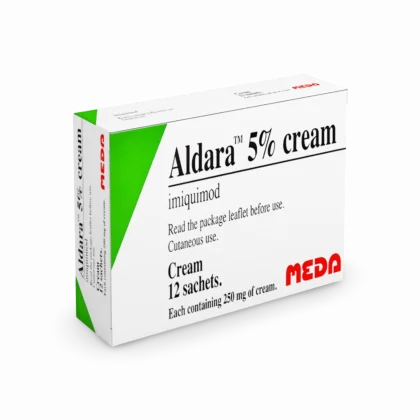
Imiquad Cream 0.5%
Activates your immune system directly at the site of application to recognize and clear abnormal skin cell growths.
 Superficial Basal Cell Carcinoma Medications
 Receiving a diagnosis of superficial basal cell carcinoma can feel overwhelming, but modern dermatological care provides effective approaches for managing this condition. These skin changes often result from cumulative sun exposure over many years. One formulation is listed below, utilizing specialized topical therapy to encourage the body’s immune system to address abnormal skin cells directly.
Activates your immune system directly at the site of application to recognize and clear abnormal skin cell growths.
Superficial basal cell carcinoma typically manifests as a flat, scaly, or slightly crusted patch that may grow very slowly across the skin’s surface. Unlike deeper forms of skin cancer, this type tends to stay in the upper layers, often appearing on the trunk or limbs rather than the face. You might notice edges that look pearly or a patch that does not heal after several weeks, even with standard moisturizing.
Cells forming this condition originate in the basal layer of the epidermis, the outermost part of your skin. While it carries a much lower potential for spreading to distant parts of the body compared to melanoma, it remains important to address these areas to prevent them from growing wider or deeper. Understanding the nature of these skin changes is the first step toward effective management and skin health maintenance.
Treatment for this condition centers on removing or destroying the affected skin cells while preserving as much healthy tissue as possible. Topical immune response modifiers represent a primary non-surgical approach. These medications work by activating your skin’s own defenses, encouraging the immune system to recognize and eliminate cancerous cells through a controlled inflammatory process.
Across various global health markets, including the United States, United Kingdom, Australia, and Canada, dermatologists may choose between surgical excision, light-based therapies, or topical creams. Your provider selects a path based on the specific location of the lesion, your medical history, and how well your skin tolerates different interventions. Topical options are frequently discussed when a non-invasive approach is preferred for thinner skin lesions.
Medications for this condition are typically categorized by how they interact with skin cells and the local immune environment. Immune response modifiers, such as imiquimod, function as topical agents that stimulate the body to produce cytokines—proteins that help the immune system identify and target damaged cells. This method is distinct from direct destruction techniques like freezing or surgery.
Topical formulations are designed for precise application to the identified site. The intensity of the local skin reaction serves as an indicator that the immune system is actively responding to the medication. Because these treatments change how your local skin environment reacts, following the specific frequency and duration advised by your dermatologist is essential to ensure the skin heals correctly after the treatment course concludes.
Addressing skin lesions requires an accurate diagnosis from a qualified healthcare professional, as visual appearances can represent different types of skin conditions. Before applying any topical treatment, ensure the area has been evaluated and confirmed as suitable for non-surgical management. This step prevents the delay of more urgent medical interventions for deeper or more complex skin cancers.
Topical immune modulators often cause local skin irritation, redness, and crusting as part of their therapeutic action. While these signals suggest the medication is interacting with the target cells, the intensity of this discomfort varies between individuals. Persistent or severe reactions, such as significant breakdown of surrounding healthy skin or signs of spreading infection, warrant immediate clinical review.
Your overall skin health, history of previous skin reactions, and other systemic immune conditions can influence how your body tolerates localized therapies. Always disclose existing skin sensitivities or recent surgeries in the treated area to your provider, as these factors may alter your recovery timeline. Product labeling and verified clinical sources remain the correct references for specific contraindications, interactions, and potential reactions.
This page provides an educational overview of superficial basal cell carcinoma and the medication categories listed—not medical advice. Individual products differ in active ingredient, formulation, strength, and directions. The page does not authorize self-directed selection, clinical interpretation, or unsupervised use. Readers should review individual product labeling and speak with a healthcare professional when clinical judgment is needed.